Huế royal tombs are not simply the burial places of Nguyễn emperors. Each combines architecture, landscape, ritual and ideas about cosmic order. Gia Long is expansive, Minh Mạng disciplined, Tự Đức poetic, while Khải Định reflects the decorative tastes of the early twentieth century.
With one day, Minh Mạng Tomb and Khải Định Tomb make the most rewarding pair for a first visit. They show how Nguyễn royal architecture changed and fit into a practical route. Travellers who prefer quiet scenery can replace Khải Định with Gia Long or Tự Đức. Use our Huế Travel Guide to combine the tombs with the Imperial City, the Perfume River and an evening plan.
Contents
Which Huế royal tombs should you choose with limited time?
- If you can visit only one: choose Minh Mạng for the fullest introduction to royal landscape, architecture and ritual. Choose Khải Định if you want striking details and a shorter visit.
- If you can visit two: Minh Mạng + Khải Định is the easiest pair to recommend to a first-time visitor.
- If you have a full day devoted to tombs: visit Minh Mạng + Khải Định + Tự Đức, allowing a proper lunch break.
- If you love scenery, quiet spaces and do not mind extra travel: choose Gia Long + Minh Mạng. Leave early and arrange a car with a driver, or use a motorbike only if you are comfortable on local roads.
Why are the Huế royal tombs more than graves?
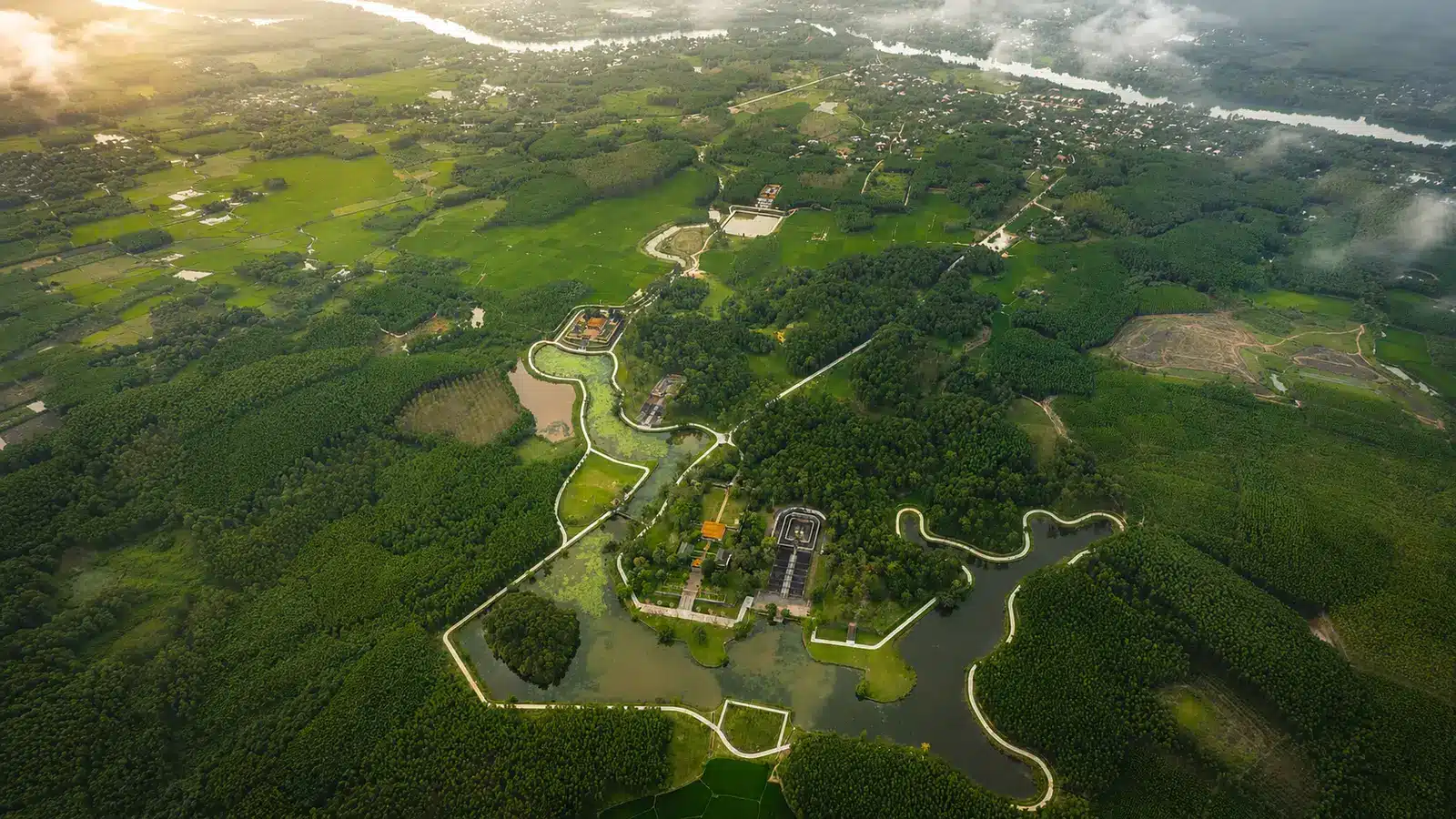
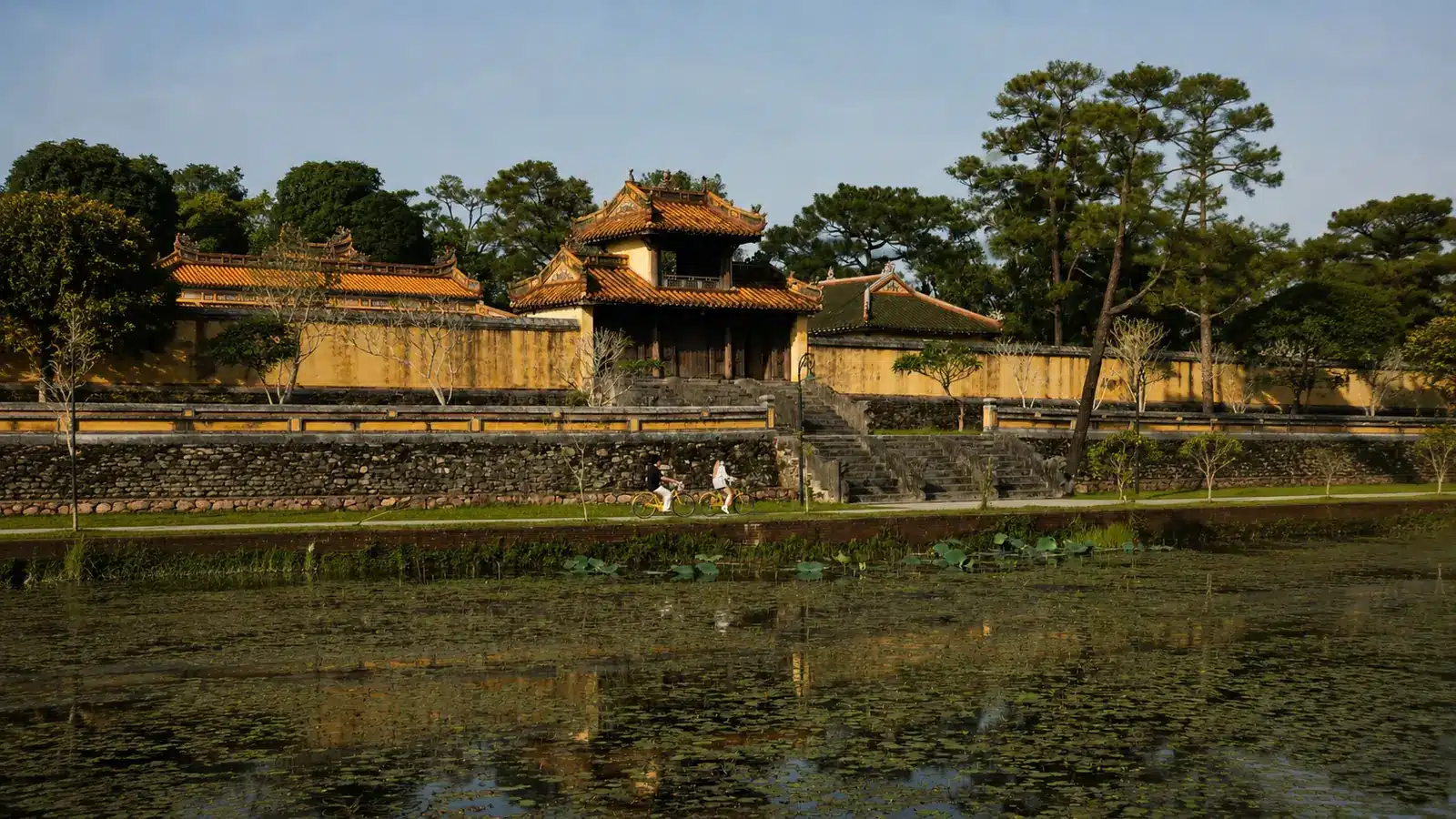
UNESCO inscribed the Complex of Hué Monuments on the World Heritage List in 1993. The imperial tombs lie upstream along the Perfume River and respond to both topography and the symbolic principles of East Asian planning. Mountains form screens, hills frame approaches, and waterways become structural parts of the design.
Several tombs were commissioned while their emperors were alive and functioned partly as royal retreats. Visiting them is therefore like reading a spatial portrait of each ruler, not following a standard sequence of gate, stele and grave.
| Tomb | Defining impression | Best for | Suggested time | Physical effort |
|---|---|---|---|---|
| Gia Long | Expansive, quiet mountain landscape | Landscape lovers, photographers, travellers seeking fewer crowds | 90–120 minutes | Moderate; a spread-out site |
| Minh Mạng | Classical symmetry balanced by lakes and hills | First-time visitors, history and architecture | 90–120 minutes | Moderate |
| Tự Đức | Poetic garden atmosphere and generous shade | Slow travel, literature and peaceful spaces | 75–100 minutes | Light to moderate |
| Khải Định | Dense ornament and Asian–European influences | Decorative arts, architecture and photography | 50–75 minutes | Many steps |

Four essential Huế royal tombs, compared
Gia Long Tomb: a landscape larger than its buildings
Thiên Thọ Tomb was built between 1814 and 1820 among hills southwest of Huế. Distant ridges, open sky, water and the long approach create its solemn character. At the centre are the side-by-side stone graves of Emperor Gia Long and Empress Thừa Thiên, an unusual double burial.
Choose Gia Long to see royal tomb design at landscape scale. Its distance from central Huế and spread-out features make it unsuitable for a rushed stop. Visit in the morning with water and comfortable shoes. Our Gia Long Tomb guide covers the route in more detail.
Minh Mạng Tomb: discipline softened by landscape
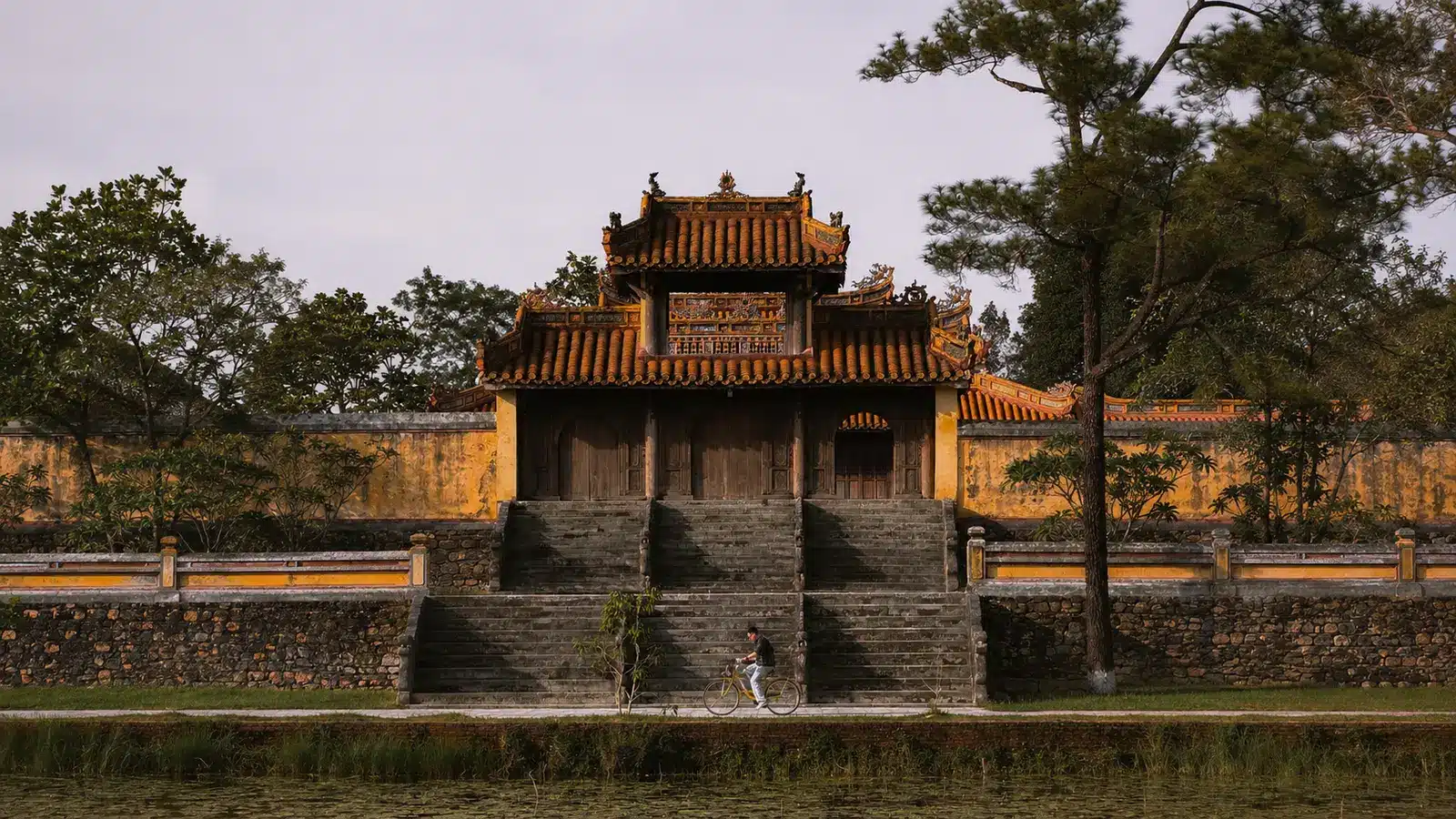
Construction of Hiếu Tomb began in 1840 and was completed under Emperor Thiệu Trị in 1843. Entrance, courtyard, stele pavilion, temples, Minh Lâu, Tân Nguyệt Lake and the burial enclosure unfold along one axis. Water, stone bridges, mature trees and curved terrain soften its formality.
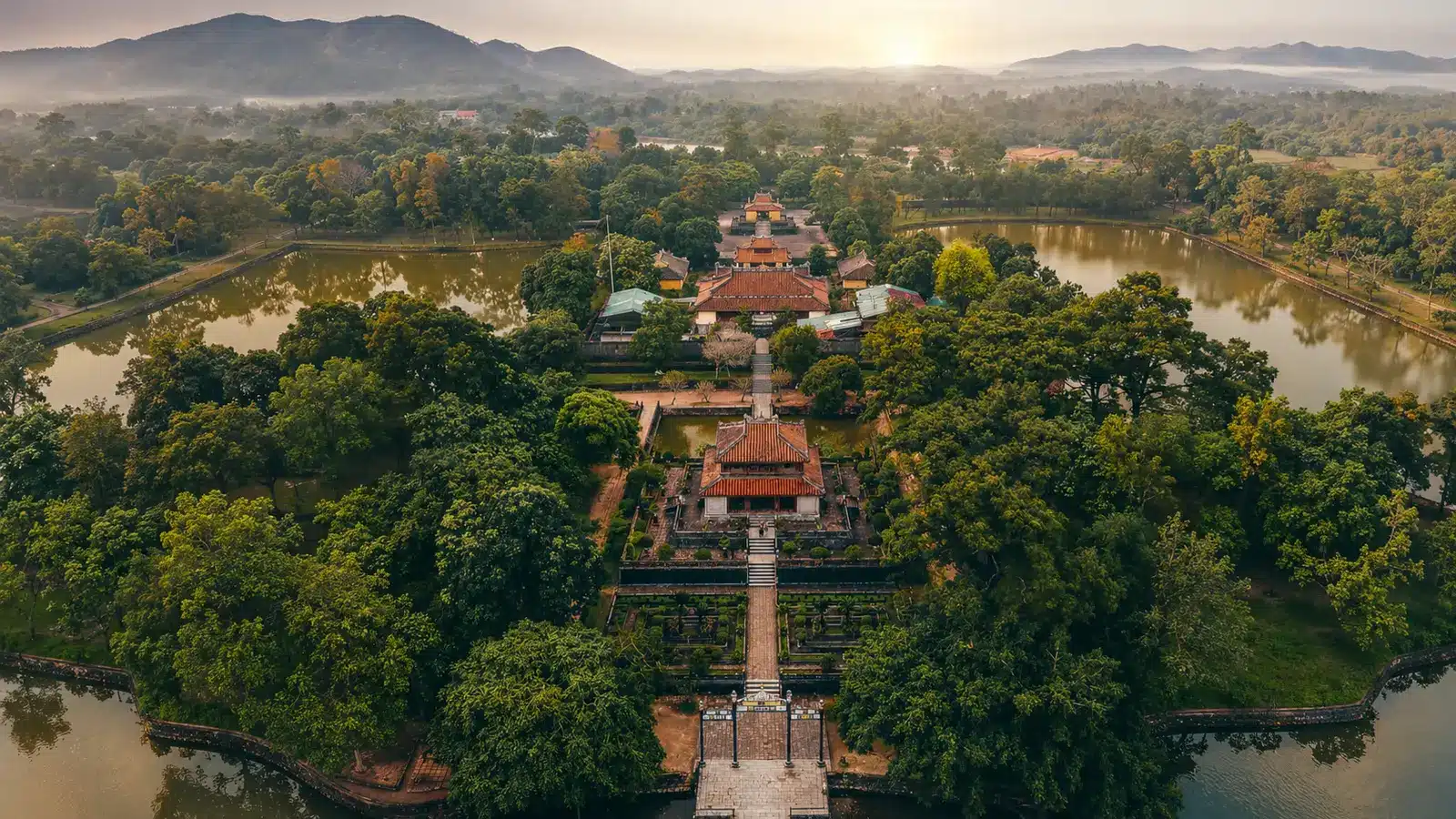
If you choose only one tomb, Minh Mạng is the most rounded option. Stone mandarins, an imperial stele, worship halls, a pavilion and the burial zone form a clear sequence. Arrive early and allow at least ninety minutes. Our Minh Mạng Tomb visitor guide examines its main axis more closely.

Tự Đức Tomb: a poetic retreat prepared for the afterlife
Khiêm Tomb occupies a narrow valley in today’s Thủy Xuân area. Emperor Tự Đức used it for rest and literary work. Lưu Khiêm Lake, its pavilions, Hòa Khiêm Palace and Minh Khiêm Theatre feel more like an inhabited royal garden than a sealed funerary monument.
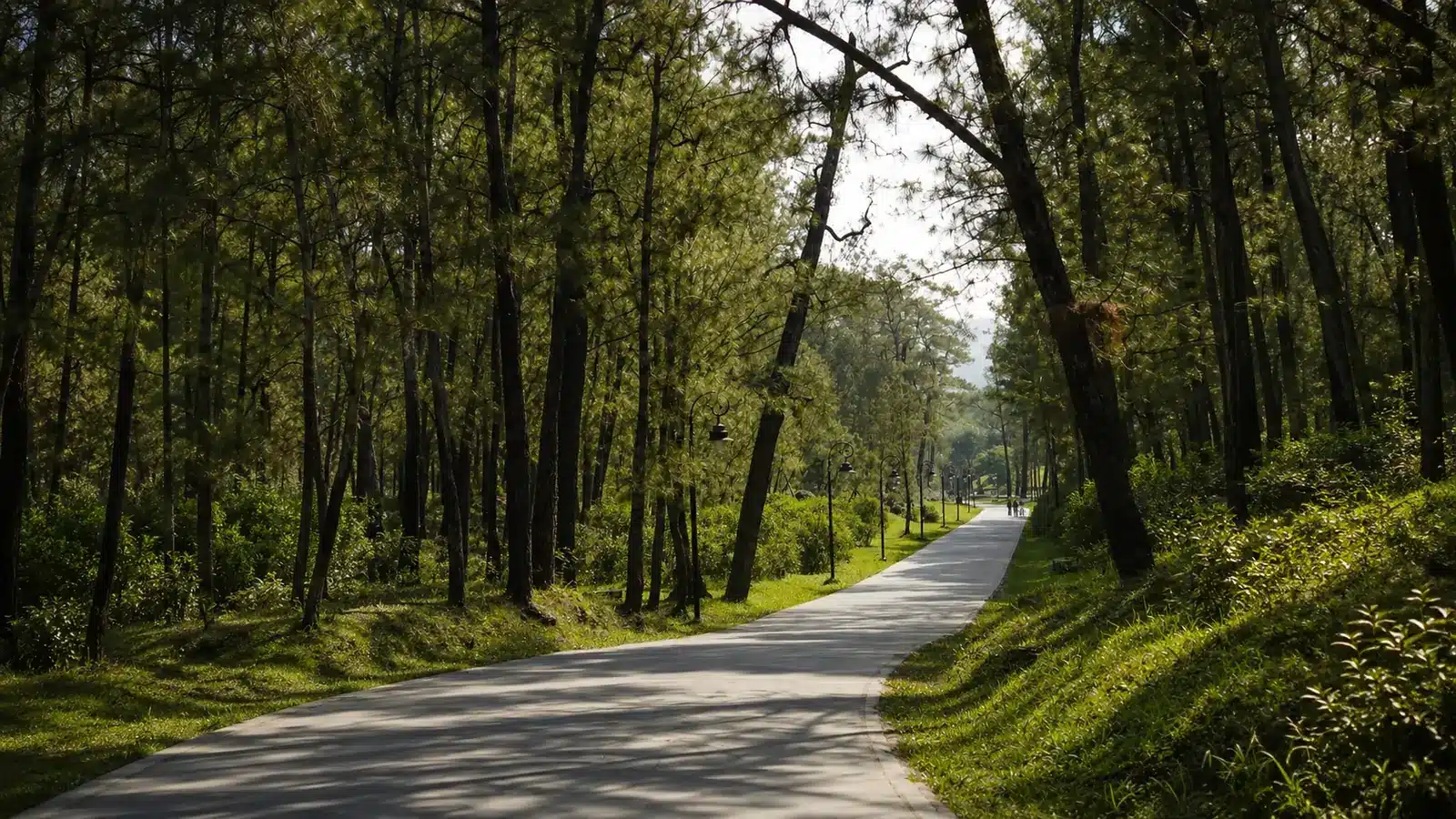
Pause at the Khiêm Cung Ký stele, whose inscription was composed by Tự Đức himself and includes autobiography and reflection on his reign. The tomb suits a mild afternoon and travellers drawn to pine shade, water and an unhurried pace. Its location is also easier to fit into one day than Gia Long.
Khải Định Tomb: the Nguyễn Dynasty’s striking final chapter
Ứng Tomb was begun in 1920 on Châu Chữ Mountain and completed in 1931. Its compact design rises dramatically uphill. Stairways lead through monumental gates and a courtyard of stone attendants to Thiên Định Palace, where porcelain, glass mosaics, painting and relief combine Vietnamese, Asian and European influences.
A visit fits into roughly one hour, but the stairs may challenge older travellers, young children or anyone with limited mobility. Let your eyes adjust to the darker palace interior and respect the rules in worship spaces.
Other royal tombs: Thiệu Trị, Đồng Khánh and Dục Đức
These quieter complexes reward a return visit. Thiệu Trị’s Xương Tomb opens toward hills and fields; Đồng Khánh’s Tư Tomb shows a transitional court style; An Tomb is associated with emperors Dục Đức, Thành Thái and Duy Tân. Confirm opening hours and conservation work before travelling.
A realistic one-day Huế royal tomb itinerary
The best first-time route: Minh Mạng – Khải Định – Tự Đức
- 07:00–09:00: explore Minh Mạng while the air is cooler. Follow the main axis, but pause at Minh Lâu and turn back toward the lake rather than treating the burial enclosure as the only destination.
- 09:30–10:45: visit Khải Định. Give the stone-statue courtyard and Thiên Định Palace time, and take a short rest after the stairs.
- 11:30–13:00: have lunch and avoid the fiercest midday heat. The food section of our local Huế guide can help you choose a dish and an area convenient for the return toward town.
- 13:30–15:15: slow the pace at Tự Đức, focusing on Lưu Khiêm Lake, the palace-temple area and the Khiêm Cung Ký stele.
- After 16:00: return to central Huế, rest, then walk by the Perfume River or explore the Vỹ Dạ–Đập Đá area.

The quieter landscape route: Gia Long – Minh Mạng
Leave around 06:30–07:00 and begin with the more distant Gia Long complex before continuing to Minh Mạng and taking a late lunch. These two tombs can fill a day for anyone interested in photography, inscriptions and designed landscapes. Resist adding several more stops merely to complete a checklist.
Practical tips for visiting royal tombs in Huế
- Opening hours: the Huế Monuments Conservation Centre currently lists summer ticket hours, from 16 March to 15 October, as 06:30–17:30; winter hours, from 16 October to 15 March, are 07:00–17:00. Weather, ceremonies, events and conservation work can affect access, so check again before your visit.
- Tickets: at the time of writing, individual adult admission for Minh Mạng, Tự Đức, Khải Định and Gia Long starts at VND 150,000. Combination tickets are available for selected routes. Use the official ticket page rather than relying on an old screenshot or blog.
- Transport: the tombs lie outside the centre and do not form a perfect loop. A car with a driver is convenient for groups of two to four. A motorbike offers flexibility, but only if you are comfortable navigating local roads and changing weather.
- What to wear: choose light but respectful clothing that covers shoulders and knees in worship areas, plus shoes with reliable grip. September in Huế can switch quickly between sun and rain, so carry water, a compact raincoat and protection for electronics.
- Heritage etiquette: do not climb statue bases, touch artefacts or speak loudly in temple spaces. Ask permission before photographing local people, staff members or active ceremonies.

After the royal tombs: an evening in Huế
After hours on foot, dinner does not need to be elaborate. Try Huế cakes, cơm hến, grilled food or a few dishes for the table, then browse the beers brewed on site at Đông Ba Brewery. Our taproom at 14 Nguyễn Sinh Cung is near Vỹ Dạ and makes an easy place to talk over the day. For a group or a weekend visit, book a table in advance.
Frequently asked questions about Huế royal tombs
Can I visit four royal tombs in one day?
It is possible in terms of driving time, but the experience will usually feel rushed. Three tombs are a sensible maximum for most visitors; two are better if you want interpretation, photography and time to appreciate the landscape.
Which is the most beautiful royal tomb in Huế?
There is no single answer. Minh Mạng offers the strongest overall balance, Gia Long the grandest landscape, Tự Đức the most poetic atmosphere and Khải Định the richest decoration.
Which tomb is best for older visitors?
Tự Đức often allows the most adaptable pace, although it still includes slopes and steps. Khải Định has substantial stairways, while Gia Long and Minh Mạng cover broad areas. Ask ticket staff about current access and shorten the route according to individual mobility.
Is a guide worthwhile?
Yes, particularly at Minh Mạng or Tự Đức, where names, spatial order and inscriptions carry several layers of meaning. Independent visitors should read reliable background information and make time for the interpretation panels on site.
Should I combine the Imperial City and royal tombs on the same day?
If one day is all you have in Huế, visit the Imperial City in the morning and one representative tomb in the afternoon. If you want two or three tombs, devote the day to the outlying route rather than overloading your schedule.
Source note: Historical details, visitor hours and ticket information were checked against the Huế Monuments Conservation Centre; heritage context was checked against the UNESCO World Heritage Centre. Hours, prices and access during conservation work can change, so consult the official sources shortly before travelling.