
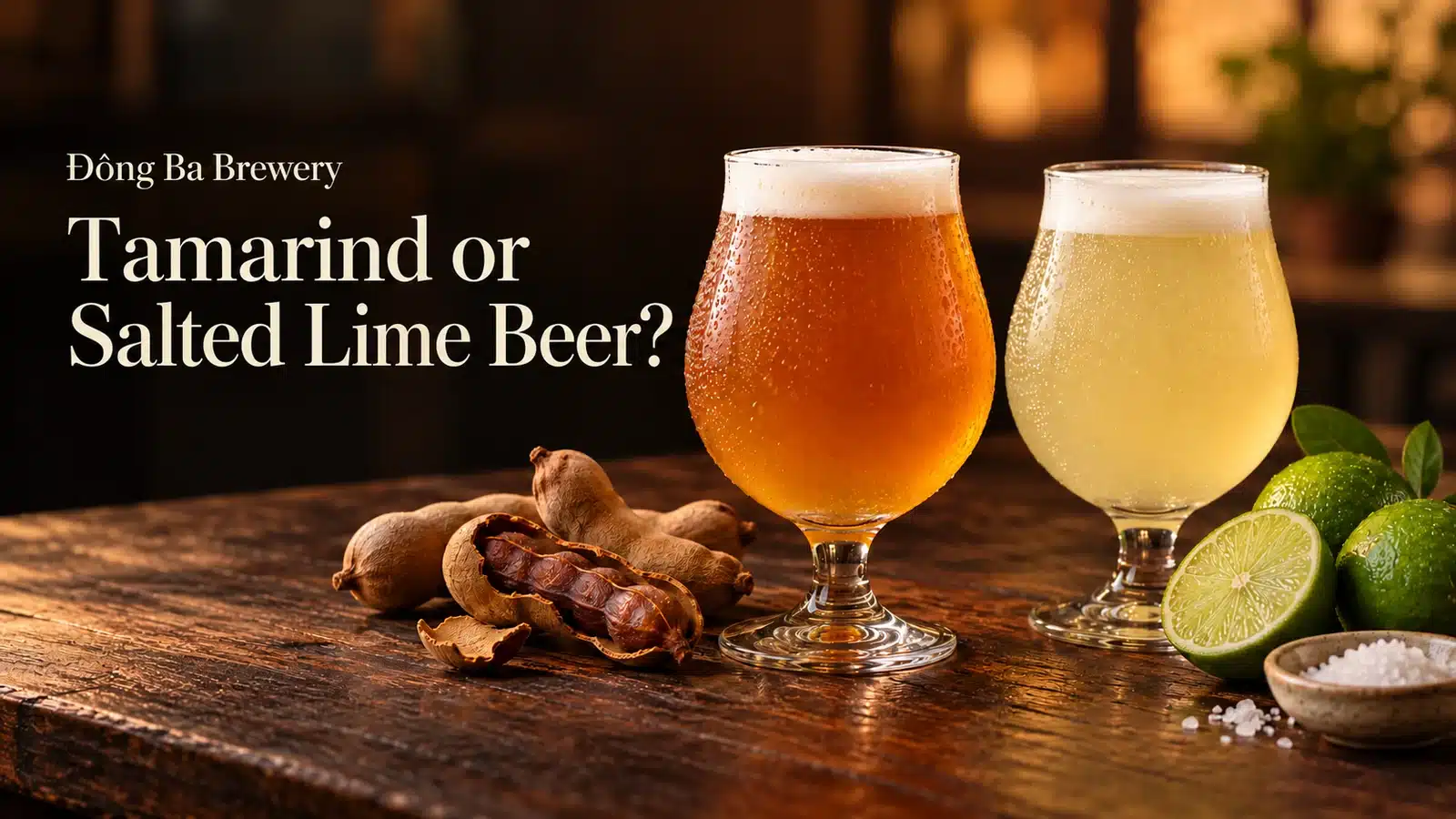
Tamarind or salted lime beer? If both sound appealing, start with the aroma you enjoy most. Tamarind Beer leans towards the familiar character of ripe tamarind and a soft malt-and-wheat base. Salted lime beer brings a fresher citrus direction, light tartness, a restrained salty note and a clean, dry finish. Neither choice needs to be a test of how much bitterness you can handle.
This guide compares the two Đông Ba Brewery beers through their published descriptions, then gives you three practical ways to choose: by aroma, by the drinking experience you want and by the food on your table. Your own preference matters more than declaring one beer the winner. Food, serving conditions and the current batch can also influence what you notice in the glass.
Reading a Vietnamese menu for the first time? Bia me means tamarind beer, while bia chanh muối means salted lime beer. These names help connect the English descriptions to familiar local ingredients. Tamarind is a brown pod fruit with tangy pulp; lime brings a recognisable citrus reference. You do not need to know the Vietnamese names to order, but recognising them can help when comparing a menu, a beer description and a conversation at the bar. Use the names to identify the beer, then the flavour notes to decide whether it sounds right for you.
On this page
Tamarind or salted lime beer: what is the difference?
Tamarind Beer: ripe-fruit aroma and a softer base
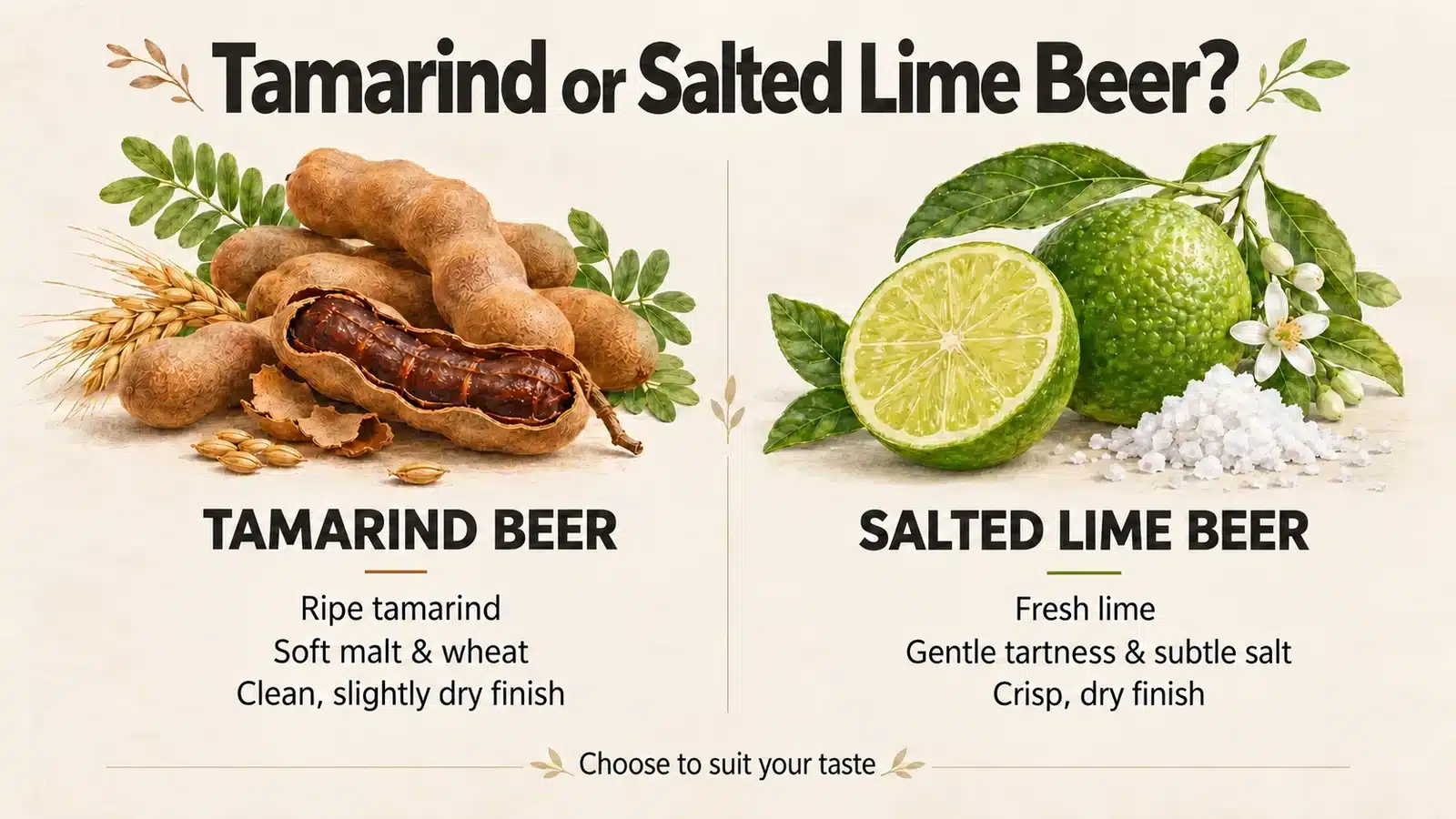
Đông Ba Brewery’s Tamarind Beer is described through light tartness, a soft malt-and-wheat character and low bitterness. Its finish is clean and somewhat dry, with a lingering impression of tamarind. That combination makes it worth considering if you like recognisable fruit aromas but do not want your beer to feel like a sweet fruit drink.
Tamarind is familiar in Vietnamese cooking, so its aroma can be an easy starting point when describing what you enjoy. Pay attention to both parts of the experience: the ripe-fruit impression on the nose and the softer beer base underneath. Enjoying tamarind in food does not automatically mean you will prefer this beer, but it gives you a useful reference for the conversation.
Salted lime beer: fresh citrus and a clean finish
Margarita Lime Gose, Đông Ba Brewery’s salted lime beer, follows a lighter citrus direction. Its description highlights lime aroma, gentle tartness, a subtle salty note and a dry, clean finish. Consider it if fresh lime and citrus appeal to you more than the rounder impression of ripe tamarind.
The Vietnamese idea of chanh muối, or salted lime, offers a familiar flavour reference, not a promise that the beer will taste exactly like a salted-lime drink. Salt is one part of the balance, rather than the whole story. In the BJCP description of Gose, tartness, restrained salt, low bitterness and a dry finish help explain the broader style. The brewery’s own description remains the better reference for this particular beer.
| What you notice | Tamarind Beer | Salted lime beer |
|---|---|---|
| Aroma | Ripe tamarind with a light malt impression | Fresh lime and citrus |
| Mouthfeel | A softer malt-and-wheat base | Light tartness with a subtle salty note |
| Finish | Clean, somewhat dry, with a tamarind echo | Dry and clean |
| A useful starting preference | Familiar ripe-fruit aromas and a softer impression | Fresh citrus, gentle salt and a crisp finish |
No short comparison captures everything in a glass. Both beers have a tart element and a low-bitterness direction, but those features do not make them identical. When choosing tamarind or salted lime beer, the aroma and the impression left after a sip are often more useful than colour alone.
3 easy ways to choose your beer
1. Start with the aroma you already enjoy
Think of the ingredients before thinking of beer styles. Do you enjoy the familiar aroma of ripe tamarind, or do you usually reach for fresh lime and citrus? If the first sounds more inviting, begin with Tamarind Beer. If the second is closer to your taste, ask about the salted lime beer. This is a starting point, not a rule that locks you into one choice.
You can also separate a liked aroma from a disliked taste. Someone may love lime peel but prefer gentler acidity; another person may enjoy tamarind while avoiding syrupy sweetness. Tell the team both parts. A specific preference is more helpful than asking for the “best” beer, because the answer depends on the experience you want.
2. Describe the mouthfeel and finish you want
Useful phrases include “low bitterness, moderate tartness and a clean finish” or “fresh lime aroma, but nothing too sharply sour for me.” If you are sensitive to sourness or salt, say so before ordering. Ask the team how the current batch compares with that preference, rather than assuming that every fruit beer is sweet or every citrus beer is intensely sour.
For a softer malt-and-wheat impression, Tamarind Beer is a sensible option to discuss. For a lighter citrus direction with a dry finish, ask about Margarita Lime Gose. Choosing tamarind or salted lime beer becomes much simpler once you have named one thing you want and one thing you would rather avoid.
3. Look at the food on your table
If you are eating with friends, choose the food together, then let each person choose their beer. A table with grilled food and seafood does not need a single beer for everyone. Tamarind and lime suggest different pairing directions, while sauces, chilli and seasoning can change how either beer tastes alongside a dish.
Consider the food you will actually eat, not only the name of the dish. A lightly seasoned bite and one covered in a tangy sauce may give you two different impressions. Start with a simple pairing idea, taste it and adjust to your own preference.
Pairing tamarind and salted lime beer with food
Try tamarind with grilled, fried or tamarind-flavoured food
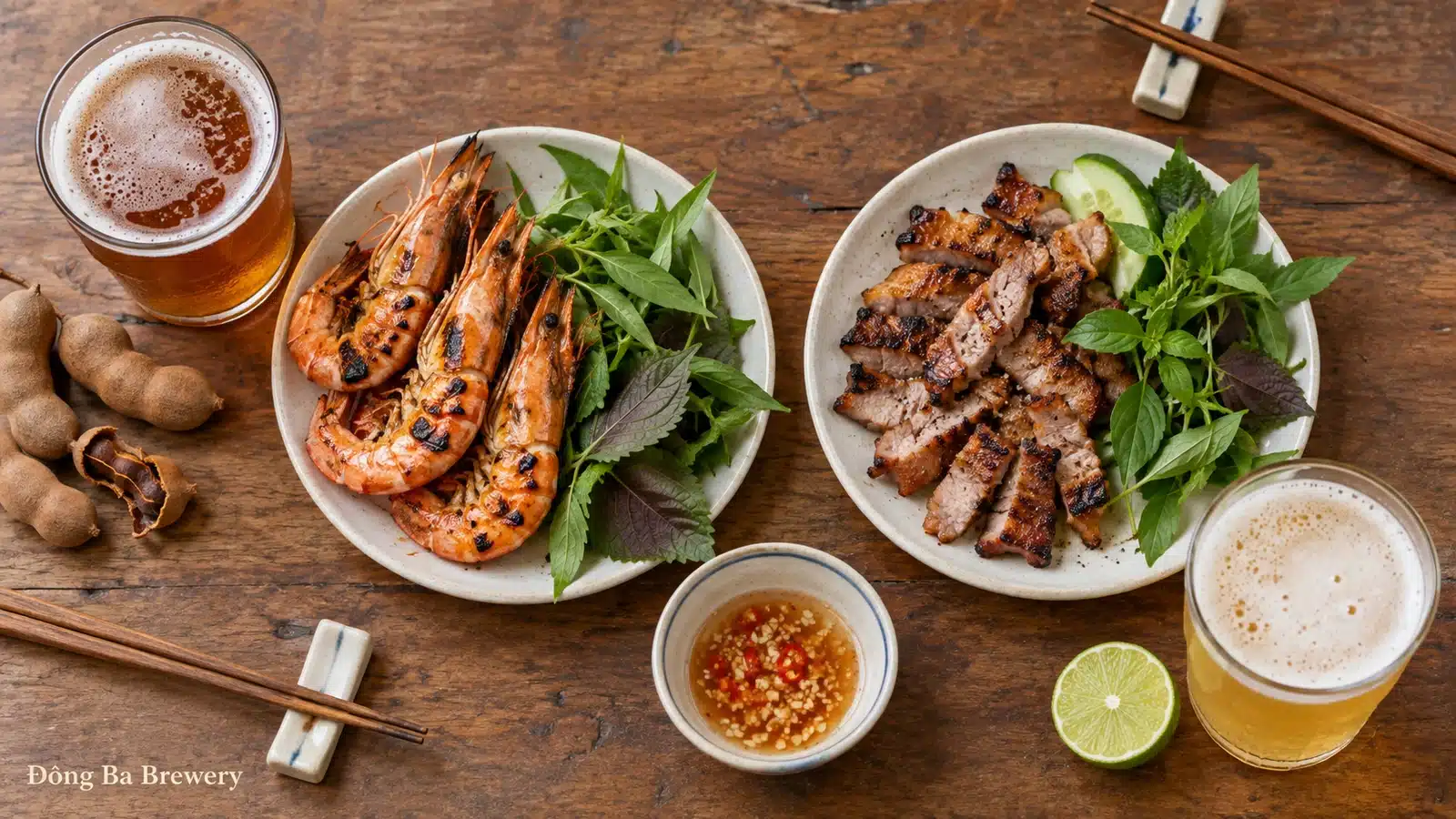
Tamarind Beer offers a familiar aromatic connection with dishes using tamarind, and an interesting contrast with richer grilled or fried food. The idea is to notice how the ripe-fruit character and beer base meet the food, not to assume that matching an ingredient always creates a perfect pairing. A strongly sweet, sour or spicy sauce can change that balance.
Explore salted lime with seafood and crisp textures
Fresh lime aroma gives you a useful direction to explore with steamed or grilled seafood, herbs and foods with a crisp texture. If the dish includes lime, lemongrass or another bright aromatic element, compare what carries through into the next sip. Taste a lightly sauced bite first so you can distinguish the food’s base flavour from a powerful dressing.
For more ideas, see our guide to pairing craft beer with Huế food. Treat pairing suggestions as prompts for your own palate, and check dishes and ingredients with the team when ordering. The illustration above is not a statement that every pictured dish is currently available.
One table can work with two different choices
Imagine a shared table with grilled food and seafood. One person might enjoy tamarind’s familiar aroma with a grilled bite; another might prefer the lime beer’s citrus direction alongside seafood. Both approaches can make sense. You do not need to turn the evening into a pairing competition or agree on one “correct” combination.
If the choice is still tamarind or salted lime beer, use the aroma you prefer as your starting point, then see how it changes with dinner. Notice the sauce as well as the main ingredient. Your favourite beer on its own may not be your favourite with a heavily seasoned bite.
Ordering when everyone has a different taste
Give the team a clear description
“An easy beer” means different things to different people. For one guest it means low bitterness; for another it means gentle acidity, a soft mouthfeel or a finish that does not feel sweet. Name the qualities that matter to you. For example: “I like tamarind aroma, but I do not want something syrupy sweet.”
If citrus is your preference, try: “I enjoy fresh lime, but I am cautious about very sour flavours. How is the current salted lime beer?” This gives the team something concrete to respond to. It also leaves room for them to suggest a different beer if neither of these choices suits your taste.
Keep tartness, bitterness and alcohol strength separate. A fruit ingredient does not guarantee sweetness, and colour or a soft mouthfeel does not tell you the alcohol content. Ask for current product information if strength is important to your decision. Do not try to estimate it from the beer’s name or how gentle it seems.
Let each person choose for themselves
Before deciding for the whole table, ask what everyone enjoys and what they want to avoid. Some guests prioritise aroma, while others care more about acidity, bitterness or the food pairing. Choosing tamarind or salted lime beer need not produce the same answer for every person.
Avoid shortcuts based on gender or on the word “fruit.” Neither tells you someone’s palate. Fruit beer is not automatically sweet, and a lime beer is not automatically sharply sour. A quick question about the preferred aroma and an unwanted flavour is a more useful way to help a friend order.
If the group is undecided, ask which beers and serving options are currently available. Share impressions if you wish, without expecting a shared verdict. Nobody needs to order a beer simply because the rest of the table has chosen it.
A simple way to taste and compare
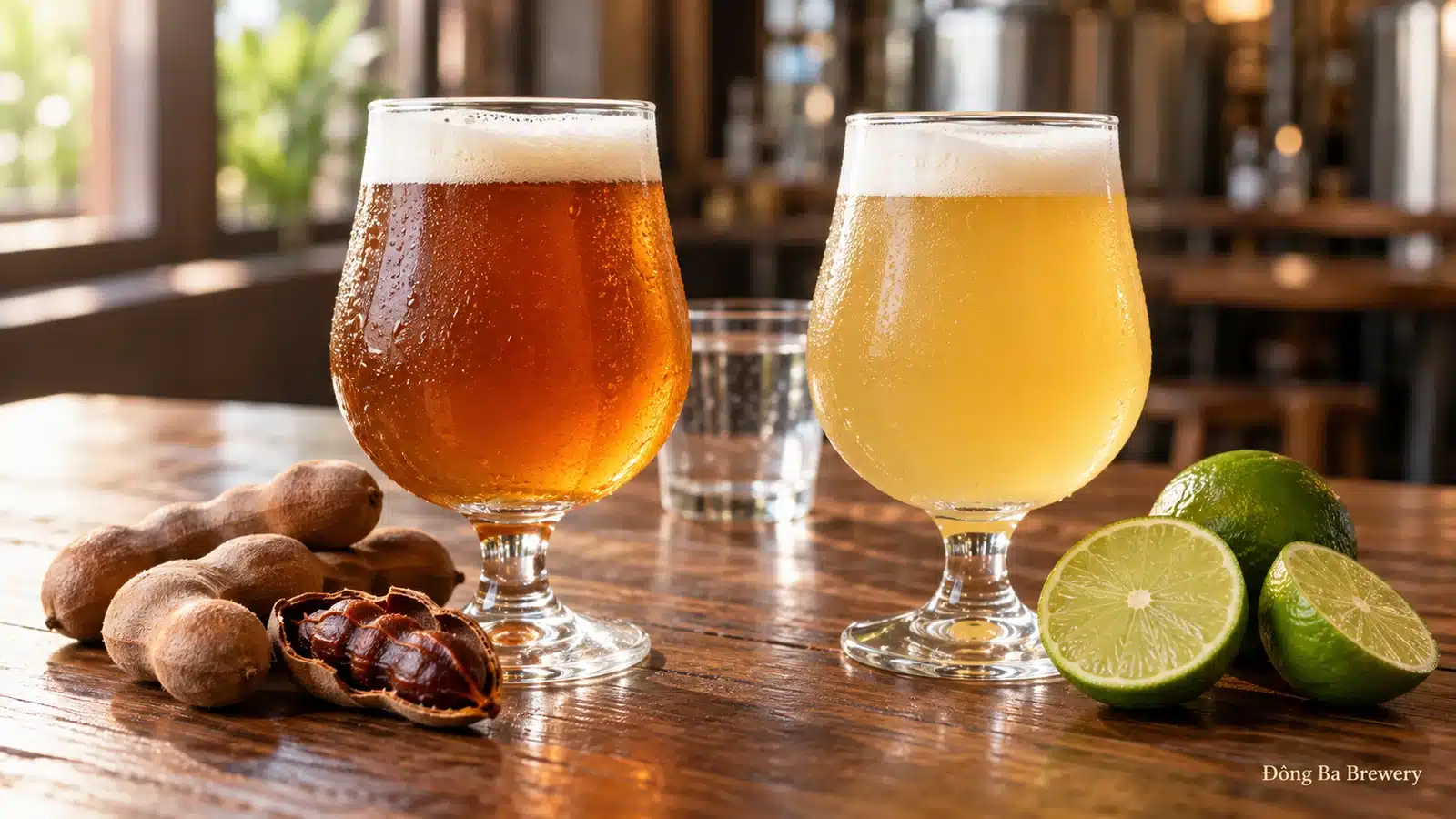
You do not need a long checklist to compare tamarind or salted lime beer. Smell the beer before taking a small sip, then give yourself a moment to notice what remains. Ask whether both beers are available and whether a suitable tasting option is offered. Drink water between tastes, and focus on your preference rather than trying to identify every possible flavour.
Separate aroma, taste and finish
First notice the aroma: is ripe tamarind or fresh lime more appealing? Next, consider the sip: how do you experience the acidity, the beer base and any salty impression? Finally, notice the finish. A fruity aroma can lead into a dry finish, and a salty note does not have to stay equally noticeable throughout the sip.
Try not to reduce the whole experience to “sour.” You may like the aroma but prefer less acidity, or enjoy the tartness while preferring a different finish. Describing those parts separately gives you a clearer answer when comparing tamarind or salted lime beer. It also makes your next conversation with the team more useful.
Taste before a very spicy bite or a strongly flavoured sauce if you want a clearer first impression of the beer itself. Then compare it with the food. Keep the exercise modest: you do not need a large quantity, a formal score or a universal winner to learn something about your taste.
With food, remember one useful detail
Take a bite, then a sip, and notice what changes. With grilled food, compare a simpler piece before adding sauce. With crisp or richer food, consider how the next sip feels rather than assuming that a pairing rule must work for you. If you enjoy the combination, that matters more than finding a technical description for it.
Remember one plain-language observation, such as “I preferred the lime aroma and dry finish” or “I liked the softer tamarind impression with dinner.” Note whether that was on its own or with food. A small, specific memory is more practical than a long list of flavours you feel obliged to recognise.
Frequently asked questions
Tamarind or salted lime beer: which should a new drinker try first?
Either can be a starting point if a low-bitterness direction appeals to you. Choose by the aroma you prefer and the amount of tartness you enjoy, then ask about the current beer. When considering tamarind or salted lime beer for a first visit, there is no need to choose according to how experienced you are.
Are these beers sweet like fruit drinks?
Do not assume so. Tamarind Beer has a malt-and-wheat base and a somewhat dry finish rather than the expected character of sweet tamarind juice. Salted lime beer is described through light tartness, restrained salt and a dry, clean finish. Read the beer description and ask about sweetness instead of using a fruit drink as an exact expectation.
What if I dislike both bitter and sour flavours?
Low bitterness does not mean low acidity. Both of these beers have a tart element, so tell the team what you dislike and ask about the current batch. If a suitable tasting option is available, it may help you decide; otherwise, ask about another beer that better matches your preference. You do not have to choose either one.
What does Gose mean?
Gose is a tart wheat-beer style associated with low bitterness, restrained salt and a dry finish in the BJCP style guidelines. Đông Ba Brewery’s Margarita Lime Gose brings its own lime direction to that reference. A style guide explains the category; it does not replace the brewery’s product description or current batch information.
Can I drink either beer with already-tart food?
You can explore the combination if you enjoy tart flavours, but citrus, sour mango or a tangy sauce may make the overall experience feel more acidic. Taste the beer and food separately before trying them together. If the combination is too sharp for your palate, use less sauce or consider another beer; there is no requirement to enjoy it.
Will both beers be available when I visit?
Availability can change with the tap list and brewing batches. If trying tamarind or salted lime beer is an important part of your visit, contact Đông Ba Brewery beforehand and ask what is currently being served. This guide describes the flavour directions, not guaranteed availability on a particular date.
Try your preferred flavour at Đông Ba Brewery

Browse the Đông Ba beer selection or plan your visit and book a table at 14 Nguyễn Sinh Cung, Huế. Tell the team which aroma, level of tartness and finish you enjoy. That is a useful way to choose tamarind or salted lime beer—and a better guide than choosing only from a name or a photograph.
Enjoy responsibly, and plan a safe journey home.