
Huế is often remembered for its Imperial City, royal tombs, garden houses and slow poetic rhythm. But beyond the famous heritage sites, there is another side of Huế that travelers should not miss: its traditional craft villages.
These villages are not just places where souvenirs are made. They are living workshops of memory, patience and local identity. In Huế, a flower can be made from paper, a painting can carry a prayer, a conical hat can hide a poem, and a stick of incense can turn a quiet street into a field of color and fragrance.
For travelers who want to understand Huế more deeply, visiting its craft villages is one of the most meaningful ways to experience the city.
Table of Contents
1. Thủy Xuân Incense Village: The Most Colorful Craft Village in Huế
Thủy Xuân Incense Village is probably the most photographed traditional craft village in Huế, and for good reason. Located near Huyền Trân Công Chúa Street, not far from Vọng Cảnh Hill and the royal tomb route, the village is famous for its bright bundles of incense arranged like blooming flowers under the sun.
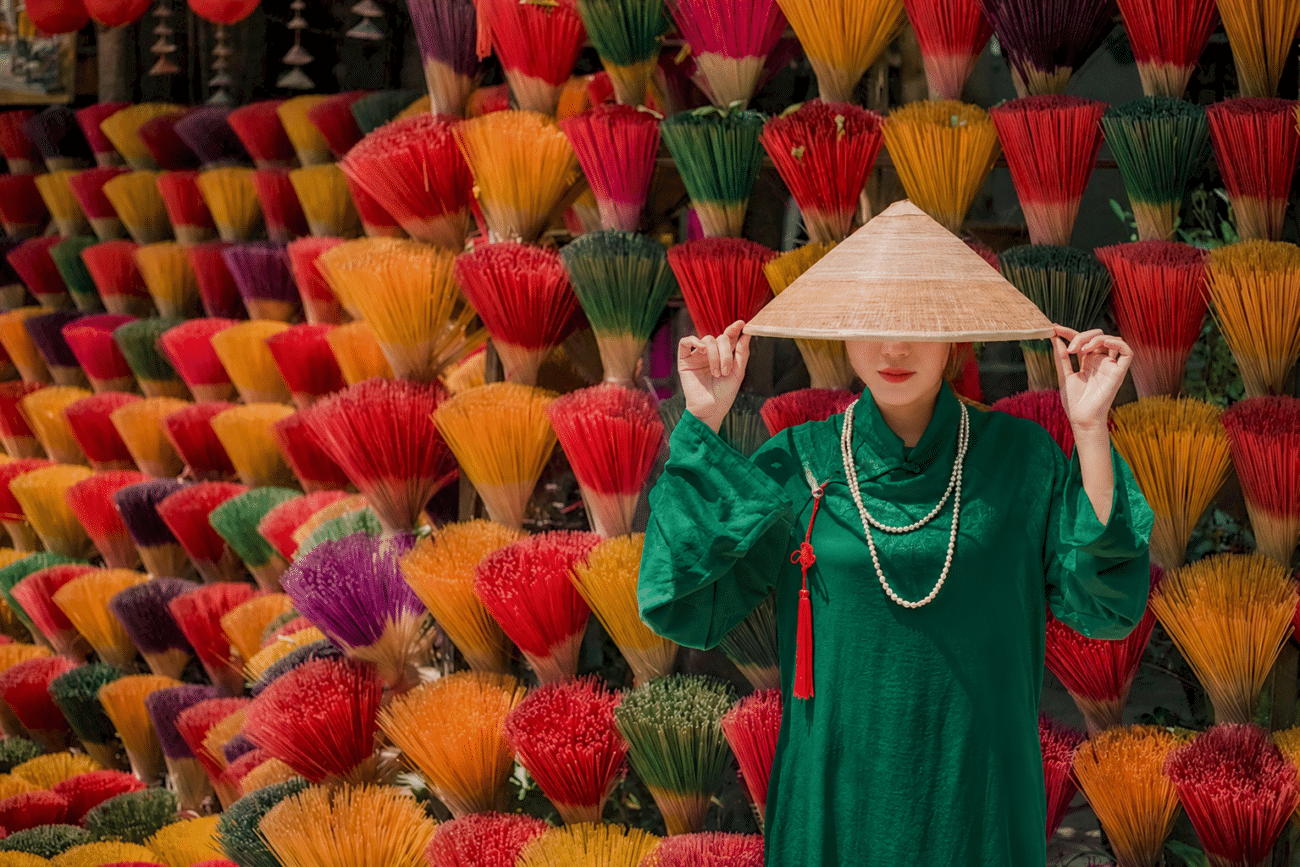
The incense here is not only beautiful. It is part of the spiritual life of Huế. For generations, incense has been used in family altars, temples, pagodas and ancestral ceremonies. Each stick carries the scent of agarwood, cinnamon, lemongrass or other natural ingredients, creating a fragrance closely tied to Vietnamese worship culture.
Today, Thủy Xuân has become a popular stop for travelers. Visitors can watch local artisans roll incense by hand, learn about the ingredients and take photos among colorful incense bouquets. It is an easy visit, especially if you are already exploring the tombs of Tự Đức, Đồng Khánh or Khải Định.
2. Thanh Tiên Paper Flower Village: Flowers That Never Fade
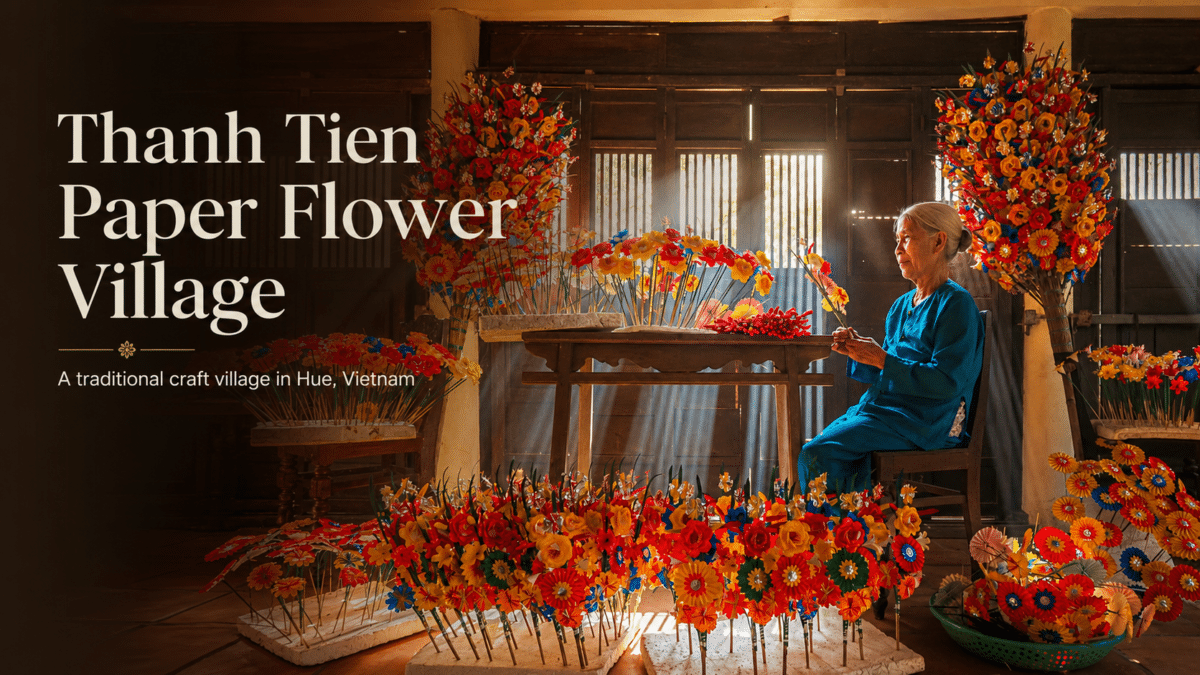
Located near the Perfume River, Thanh Tiên Paper Flower Village is one of Huế’s most delicate traditional craft villages. The village has preserved the art of making handmade paper flowers for more than 300 years.
In the past, Thanh Tiên paper flowers were mainly used for worship and important family rituals. In Huế culture, flowers are essential offerings on ancestral altars, but fresh flowers were not always available or easy to keep in the region’s rainy and sunny climate. Paper flowers became a beautiful and practical solution.
The craft is surprisingly detailed. Artisans prepare bamboo stems, dye paper, cut petals, shape leaves and assemble each flower by hand. Traditional flowers include lotus, chrysanthemums, roses, apricot blossoms and orchids. Among them, the paper lotus is especially beloved, carrying the quiet elegance often associated with Huế.
Today, Thanh Tiên has found a new life through cultural workshops. Travelers can join hands-on sessions, make their own paper flowers and bring home a souvenir that feels more personal than something bought from a shop.
3. Sình Village Folk Paintings: Spiritual Art on Dó Paper
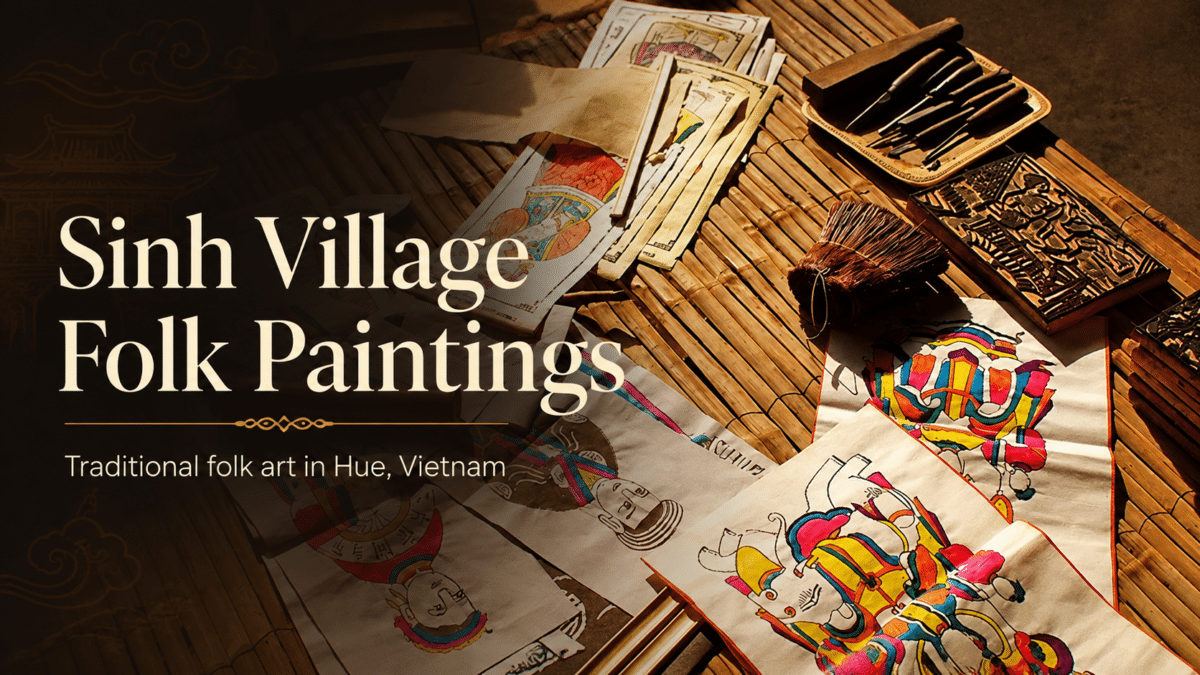
Sình Village, also known as Làng Sình, is one of the most culturally rich craft villages near Huế. Located in the Phú Mậu area, this village is famous for its traditional folk paintings printed from carved wooden blocks.
Unlike decorative paintings made only for display, Sinh folk paintings were traditionally created for spiritual purposes. Many were used in worship rituals, ceremonies and offerings. The images often feature deities, protective figures, animals, village life and symbolic scenes connected to Vietnamese folk beliefs.
The process is entirely handmade. Artisans carve the woodblocks, print the outlines on dó paper, then add colors by hand. This gives each painting a warm, human quality. No two pieces feel completely identical.
For visitors interested in folk art, Sình Village offers a quieter, deeper experience than many tourist attractions. It is a place where art, belief and village life meet in a very Huế way: modest, spiritual and full of detail.
4. Tây Hồ Conical Hat Village: The Home of Huế’s Poem Hat
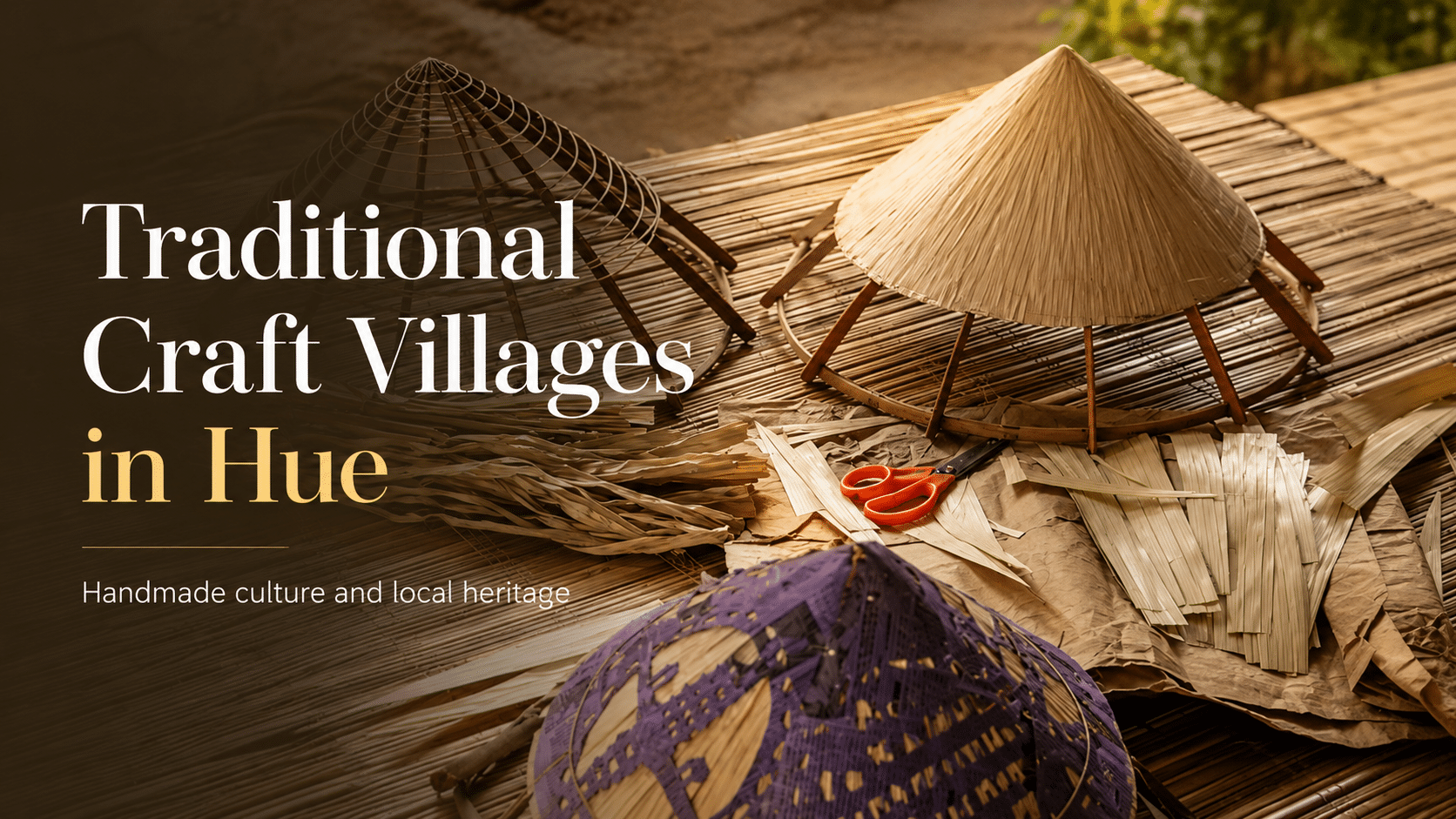
The nón lá is one of the most recognizable symbols of Vietnam, but Huế has its own special version: the nón bài thơ, or poem conical hat.
Tây Hồ Village is known for preserving this elegant craft. What makes the Huế poem hat special is the hidden design placed between layers of palm leaves. When held under sunlight, delicate images or verses appear inside the hat, often showing symbols of Huế such as Thiên Mụ Pagoda, Trường Tiền Bridge or romantic lines of poetry.
Making a conical hat requires great patience. Artisans choose and dry the leaves, build the bamboo frame, arrange the decorative layer and stitch everything carefully by hand. The finished hat is light, graceful and practical, but also poetic.
For travelers, visiting a conical hat village is a chance to see how a familiar Vietnamese object becomes something more intimate in Huế. It is not just a hat. It is shade, memory, craftsmanship and poetry stitched into one shape.
5. Phước Tích Pottery Village: Ancient Houses and Royal Ceramics
About 40 kilometers north of Huế, Phước Tích is one of the oldest villages in Central Vietnam. The village is known for its peaceful ancient houses, garden paths, riverside setting and long tradition of pottery.
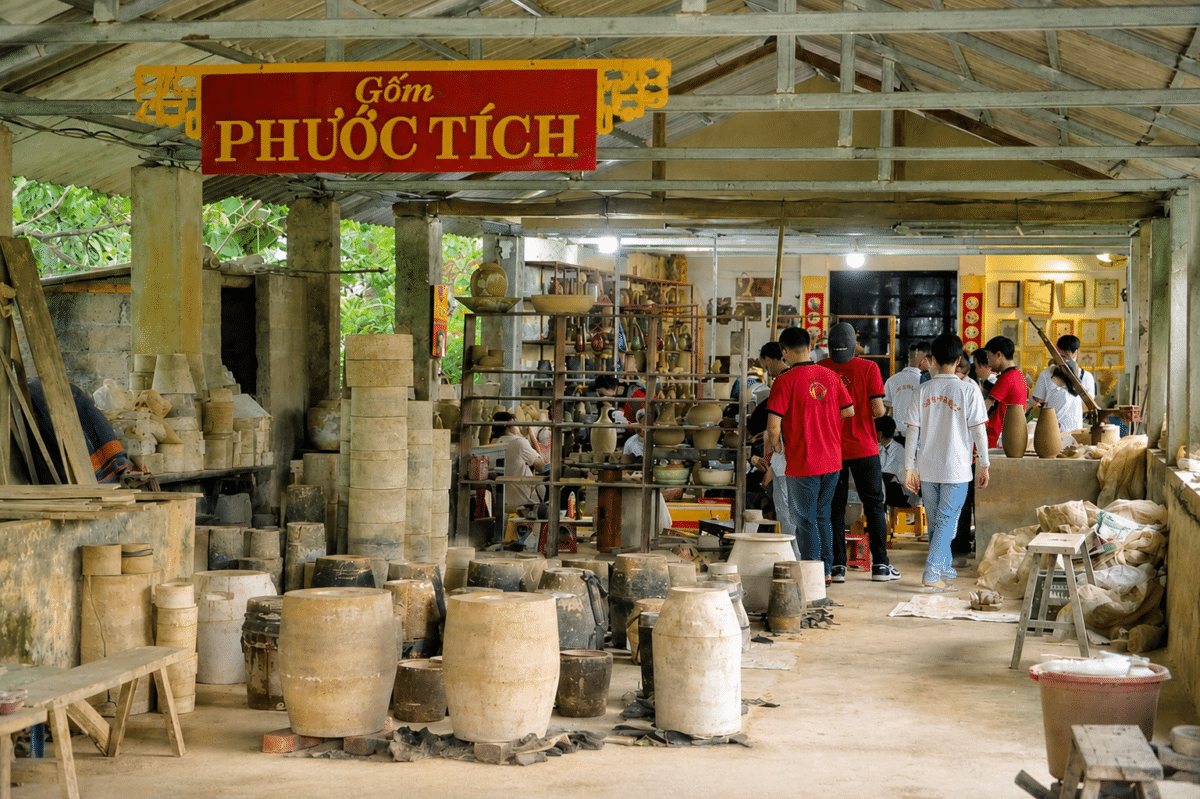
Phước Tích pottery was once valued for both daily household use and royal demand. Local artisans created jars, pots, clay stoves and ceramic items with simple but durable forms. The beauty of Phước Tích is not loud. It is rustic, earthy and time-worn.
A trip to Phước Tích feels different from visiting villages closer to the city. It is slower and more rural. Travelers can walk among old wooden houses, learn about traditional pottery kilns and feel the atmosphere of a village that still carries the shape of old Huế.
This is a good destination for those who enjoy heritage, architecture and quiet countryside experiences.
6. Mỹ Xuyên Wood Carving Village: Craftsmanship for Temples and Ancient Houses
Mỹ Xuyên Wood Carving Village, located north of Huế, is known for traditional wood carving. For centuries, artisans here have created carved panels, statues, altars, furniture and decorative details used in temples, communal houses and traditional homes.
This craft is closely connected with Huế’s royal and spiritual architecture. The carving style often reflects Eastern symbolism, religious imagery and the refined aesthetics of old wooden houses. Every line requires concentration, strength and a deep understanding of material.
Unlike colorful incense or paper flowers, wood carving is quiet work. It asks visitors to slow down and look carefully. The value lies in the details: a curve of a dragon, the folds of a robe, the grain of old timber, the rhythm of a chisel.
For travelers who love architecture and traditional design, Mỹ Xuyên is one of the most interesting craft villages around Huế.
Why Huế’s Craft Villages Matter
Traditional craft villages are important because they keep culture alive through daily work. They are not museum displays. They are homes, workshops and family traditions passed from one generation to the next.
For modern travelers, these villages offer something different from quick sightseeing. You can meet artisans, touch the materials, join a workshop and understand how much patience goes into a handmade object.
In a city like Huế, craft villages also help tell the story of local identity. The Imperial City shows the royal side of Huế. The pagodas show its spiritual side. The food shows its delicate taste. But the craft villages show its hands: careful, creative and quietly proud.
A Craft Beer Stop After a Craft Village Day
After a day exploring traditional craft villages in Huế, it feels natural to end with another kind of craft: local craft beer.
At Đông Ba Brewery, we are a small craft brewery in Huế, brewing fresh beer on site and creating flavors inspired by the local spirit of the city. Just like Huế’s artisans, we believe that good things take time, care and a strong connection to place.
Whether you spend the day making paper flowers in Thanh Tiên, watching incense dry in Thủy Xuân or discovering folk paintings in Sình Village, we would be happy to welcome you for a fresh beer, local food and a relaxed evening in Huế.
Because in the end, craft is not only about what we make. It is about how we keep a place alive.
Suggested One-Day Craft Village Itinerary in Huế
If you only have one day, you can combine a few villages into a gentle cultural route:
Start in the morning with Thủy Xuân Incense Village, then continue to the royal tomb area nearby. In the afternoon, visit Thanh Tiên Paper Flower Village and Sình Village Folk Paintings near the Perfume River. If you have more time, save Phước Tích Pottery Village or Mỹ Xuyên Wood Carving Village for a slower half-day trip outside the city.
This route gives you a beautiful mix of color, history, spirituality and hands-on craft experiences.
Planning a Respectful Visit to Huế’s Craft Villages
Begin by choosing one or two crafts that genuinely interest you. A visit to craft villages is more rewarding when there is time to talk and observe, rather than taking a quick photograph at every stop. If you want to make a paper flower, print a picture or try another technique, contact the workshop beforehand to ask about availability, duration, cost and what you can take home.
Not every house in a village welcomes visitors, and working schedules can change with the season, orders or family commitments. Do not assume an artisan is always ready to give a demonstration. In craft villages, greet people first, ask before taking close-up portraits and wait for permission before touching tools or materials. Shrines, old printing blocks and unfinished pieces belong to a working and living space, even when a shop also receives tourists.
For a half-day outing, choose one cluster rather than trying to see all six craft villages. Thủy Xuân can fit alongside a western Huế sightseeing stop. Thanh Tiên and Sình make a useful pairing for paper flowers and folk prints. Phước Tích is farther away, so allow separate time for the drive, lunch and a walk through the village. Check your transport route and weather forecast before setting out, and leave room for an unhurried conversation.
When buying directly from craft villages, ask how the object was made, what its decoration means and how to protect it on the journey home. Paper flowers need protection from moisture and crushing; conical hats need space to keep their shape; pottery needs padding against knocks. Choosing one well-packed object is often more practical than buying several fragile pieces. Our Huế souvenir guide can help you match a gift to its recipient and your luggage.
The appeal of craft villages lies in the process as much as the finished object. A simple question about which step takes the longest can lead to an interesting conversation about the work. If you are visiting with children, ask which activities suit their age and let the instructor decide when scissors, carving tools, dyes or other equipment can be handled. Watching carefully can be just as worthwhile as making something yourself.
Leave enough time for packing and payment at the end of a workshop. Ask whether a newly made object needs to dry before traveling and whether a protective box is available. For an unusually large or delicate piece, discuss shipping directly with the maker rather than assuming it will fit into cabin baggage. Keep the craftsperson’s name or contact details with your purchase so the story behind your souvenir does not disappear once you return home.
Final Thoughts
Huế is not a city to rush. Its beauty often appears in small details: the scent of incense, the thin line of a folk painting, the soft curve of a conical hat, the fragile petals of a paper lotus.
Visiting traditional craft villages in Huế allows travelers to see the city beyond monuments and postcards. It helps you meet the people who still shape Huế by hand, one object at a time.
If you are planning a trip to Huế, leave space in your itinerary for these villages. They may not be the loudest attractions, but they are among the most memorable.