Huế cuisine is often introduced through two images: an imperial banquet and a humble bowl of cơm hến. Its real character lies between them. Courtly technique, resourceful home cooking, Buddhist vegetarian practice and ingredients from gardens, rivers and lagoons have created food that feels refined and deeply everyday at once.
This is not a ranked restaurant list. It explains three layers of Huế food — imperial, folk and vegetarian — then offers a realistic one-day rhythm. Use the Huế Travel Guide 2026 to fit meals around the Imperial City, royal tombs and Perfume River.
Contents
Why is Huế called Vietnam’s culinary capital?
Huế was the Nguyễn dynasty capital from 1802 to 1945. Ingredients, cooks and knowledge from different regions reached the court, where dishes were refined and organised for palace life. Court and city were not sealed off: everyday dishes could enter the palace, while techniques and aesthetic ideas travelled back into family kitchens.
Huế’s importance is not simply about recipe numbers. Its sensibility appears in small portions, colour, seasonality and contrasts such as soft and crisp, rich and clean. Shrimp paste, chilli, herbs, peanuts, sour fruit and broth can give a modest plate depth. Pleasure comes from proportion, not abundance.

The three cultural layers of Huế cuisine
1. Imperial cuisine: refinement through order and balance
Royal food is sometimes reduced to ornate names or decorative dragons and phoenixes. Its deeper logic includes careful ingredients, seasonal adjustment, serving order, visual harmony and balance across the meal. During the Nguyễn period, ideas from different parts of Vietnam met in the capital and shaped a recognisable Huế style.
Modern “imperial dining” experiences vary. Look beyond costumes: a meaningful one explains ingredients, technique and etiquette. The guide to the Nguyễn dynasty royal tombs in Huế connects this food culture with a period in which architecture, gardens and ritual shared the same concern for setting and harmony.
2. Folk cuisine: modest ingredients, many layers
Visitors meet everyday food more often than royal banquets. Cơm hến, small cakes, soups, braised dishes and garden vegetables rely on accessible ingredients, practised hands and contrast within a small portion.
Cơm hến is a clear example. Rice and tiny clams form a simple base; herbs, peanuts, crisp pork, shrimp paste, chilli and hot broth add aroma and texture. Huế’s rice and tapioca cakes similarly balance dough, shrimp, scallion oil and fish sauce. Refinement comes from ratios and repetition, not luxury.
3. Vegetarian cuisine: a living practice, not an afterthought
Huế has a vegetarian tradition connected with Buddhist life and family custom. It becomes especially visible on the first and fifteenth lunar days but is not limited to them. Tofu, mushrooms, bamboo shoots, greens, sesame and root vegetables create meals that are light without being monotonous.
Do not focus only on meat substitutes. Seasonal soup, braised tofu, green fig salad and vegetables can be memorable through restraint. Strict vegetarians and vegans should ask about broth, fish sauce, alliums and shared equipment.
A one-day local food itinerary in Huế
Eating like a local is not a challenge to finish every famous dish. Follow a natural rhythm: hot breakfast, focused lunch, small cakes in the late afternoon and shared dinner. Adjust for weather, appetite and dietary needs.
6:30–8:30 AM: begin with a hot breakfast
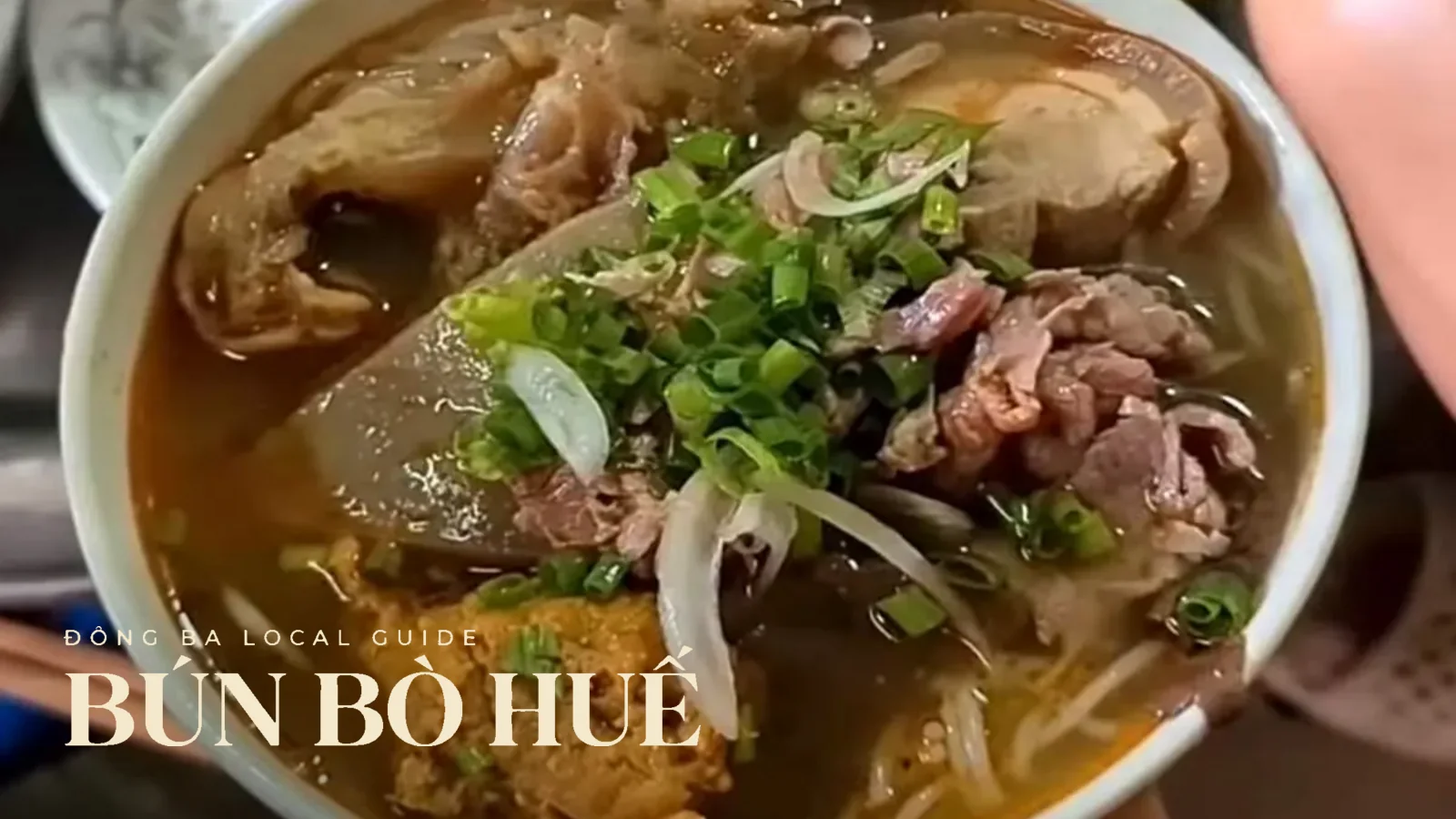
Bún bò Huế is the classic start: lemongrass broth with depth from fermented shrimp paste, served with herbs, lime and chilli. Taste before adding chilli oil. If you avoid heat, say so when ordering; lighter alternatives include bánh canh, porridge, sticky rice or vegetarian noodles.
Many breakfast shops trade for only part of the morning and may sell out. Arrive early for a fuller choice and time to sightsee; avoid turning breakfast into an exhausting multi-stop tour.
9:30–10:30 AM: see a market or pause for coffee
A market reveals the foundation of Huế cooking: fermented sauces, chillies, herbs, cakes and dried goods. Sample lightly before lunch. Salt coffee is an enjoyable pause but also a rich, sweet drink.
For a heritage-focused morning, visit the Imperial City first. The aim is not strict timing, but avoiding heavy dishes without enough walking and rest between them.
11:00 AM–1:00 PM: choose a focused local lunch
Cơm hến or bún hến suits travellers who want a dish with strong local character and multiple textures. A family-style rice meal with braised food, soup and vegetables is equally revealing. If breakfast was rich, this can also be the right moment for a vegetarian lunch.
Tell the kitchen about shellfish or peanut allergies and whether you avoid fermented shrimp paste. The thick dipping sauce served with bánh khoái may contain peanuts and, in some versions, liver. Vegetarian and non-vegetarian food may be prepared in the same kitchen. A direct, polite question is safer than assuming from the name of a dish.
2:30–4:30 PM: make room for Huế’s small cakes
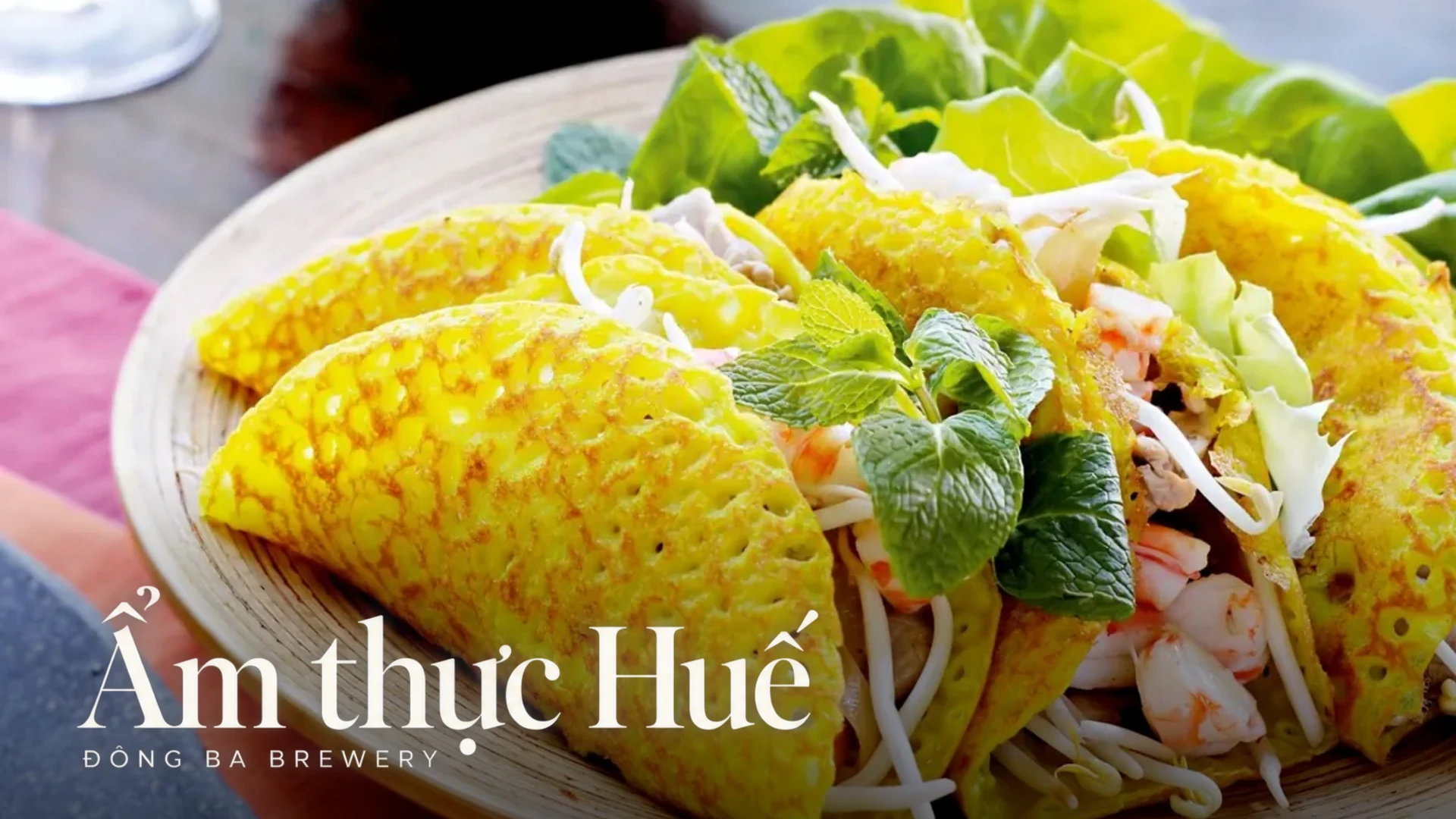
Two to four people can share bánh bèo, bánh nậm, bánh lọc and ram ít. “A little of each” lets you compare soft rice batter, chewy tapioca, shrimp, scallion oil and fish sauce.
Bánh khoái and nem lụi are more filling, so choose them instead of automatically adding every cake. Hours and menus change; check on the day and pick one specialist stop. More local stories are in the Đông Ba Journal.
4:30–6:00 PM: choose one sweet thing and leave some space
Huế sweet soups range from lotus seed and beans to tapioca desserts. Order a small cup, request less sweetness if needed, or choose seasonal fruit. A slow Perfume River walk gives the day a welcome pause.
From 6:00 PM: share dinner rather than collecting dishes
A good evening table might include vegetables or salad, seafood, one grilled dish, a starch and suitable drinks. Order less than you think you need in the first round and add food later. Hot dishes arrive at their best, waste is reduced, and nobody feels obliged to finish a catalogue of specialities.
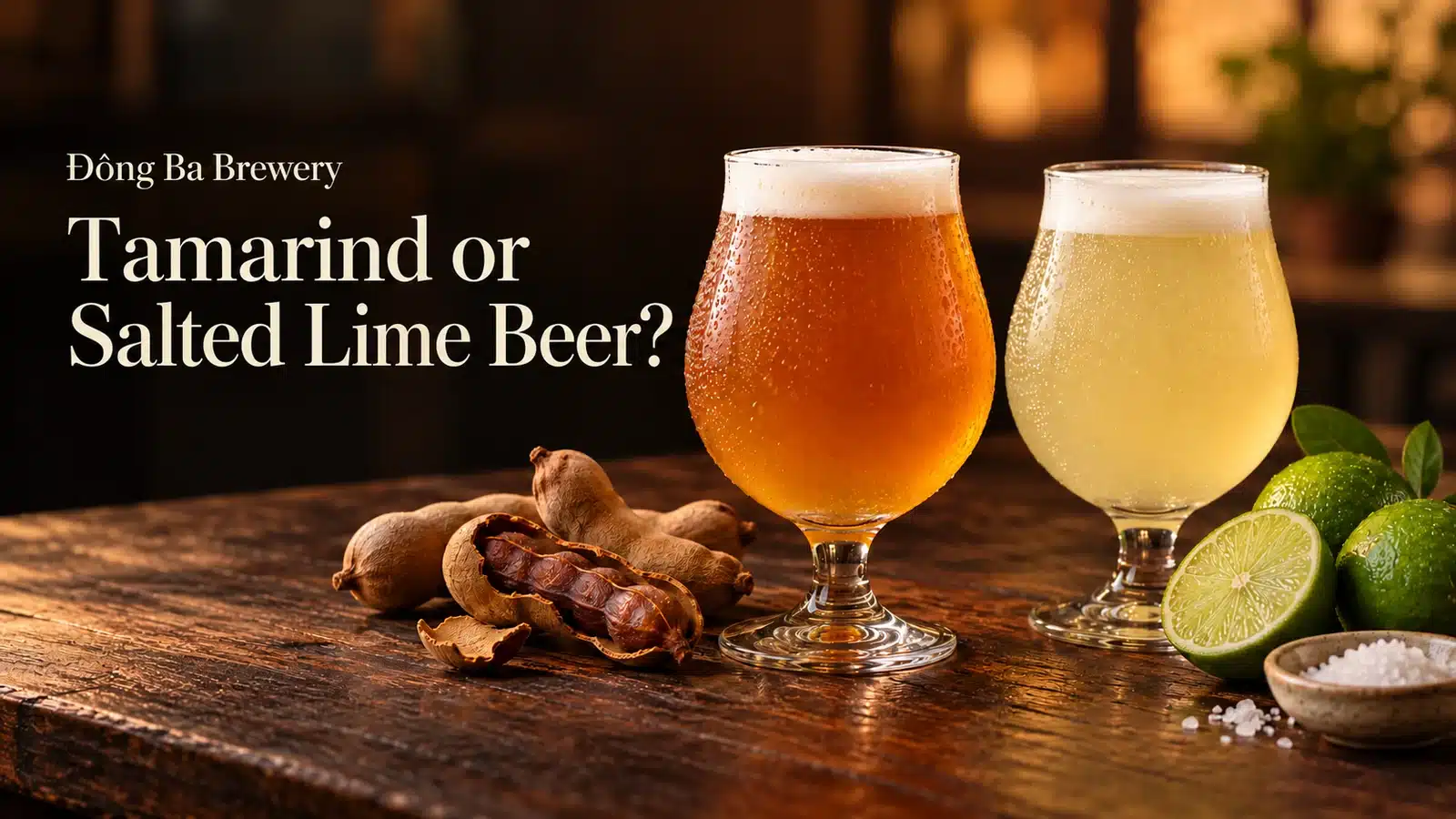
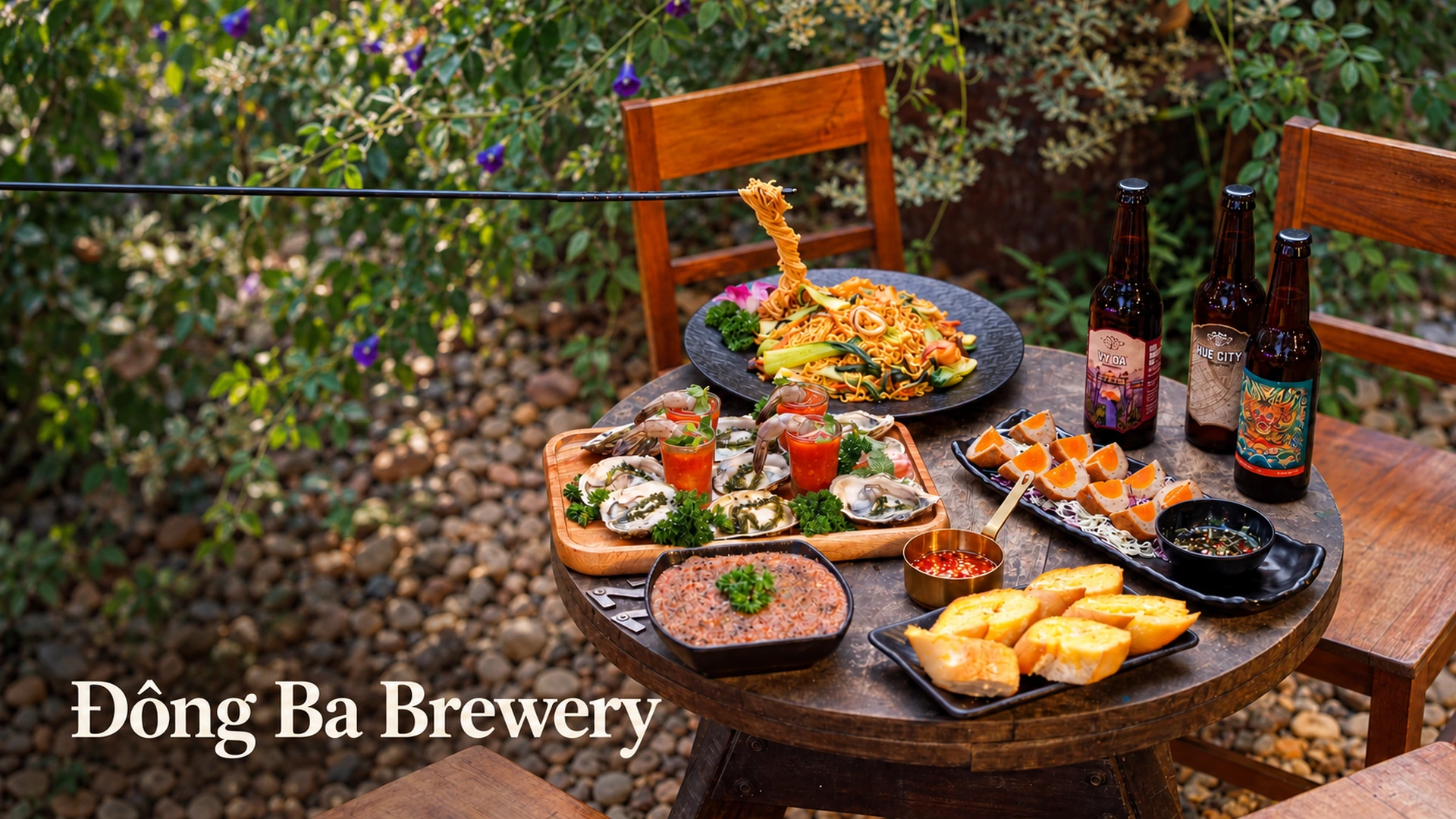
If you are curious about a contemporary local drink, the separate guide to pairing craft beer with Huế food explains how Pale Ale, IPA, wheat beer and seasonal styles interact with herbs, seafood, fried textures and grilled flavours. That is an optional extension; Huế’s food culture remains the centre of this itinerary.
Practical tips for enjoying Huế food without overload
- Choose one dish per rhythm. Breakfast, lunch, a late-afternoon taste and dinner tell a rich story.
- Share small portions. Many Huế specialities suit comparison better than large individual courses.
- Taste before adding chilli. Heat may already be present in broth, fermented condiments or a mixture added before serving.
- Ask about hidden ingredients. Pay attention to shellfish, shrimp paste, peanuts, liver in dipping sauce and shared preparation areas.
- Check same-day opening hours. Small shops may trade for one meal, close unexpectedly or sell out early.
- Leave breathing room. Huế is better with time to sit, walk and talk between meals.
Contemporary Huế food: an optional evening stop
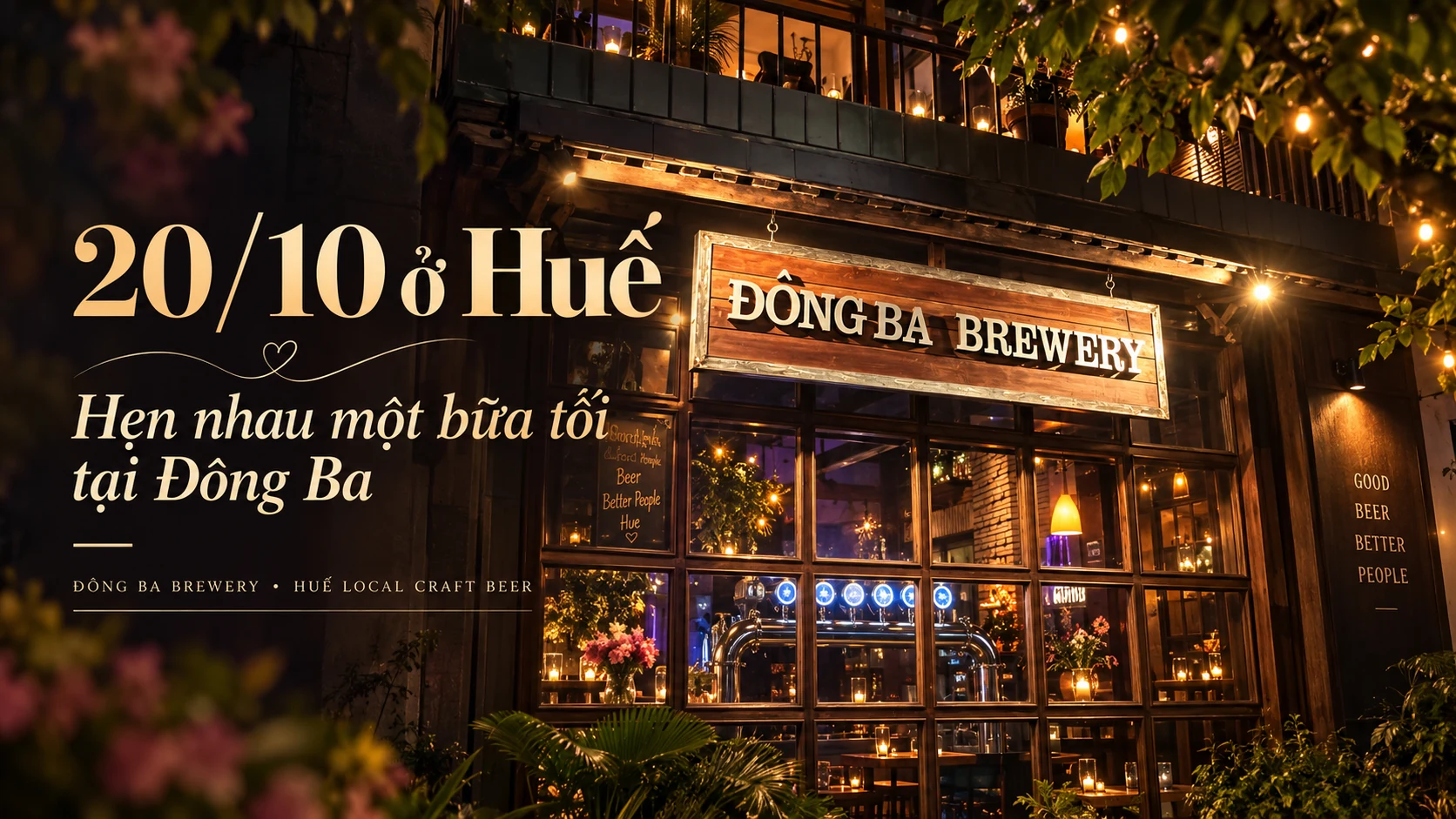
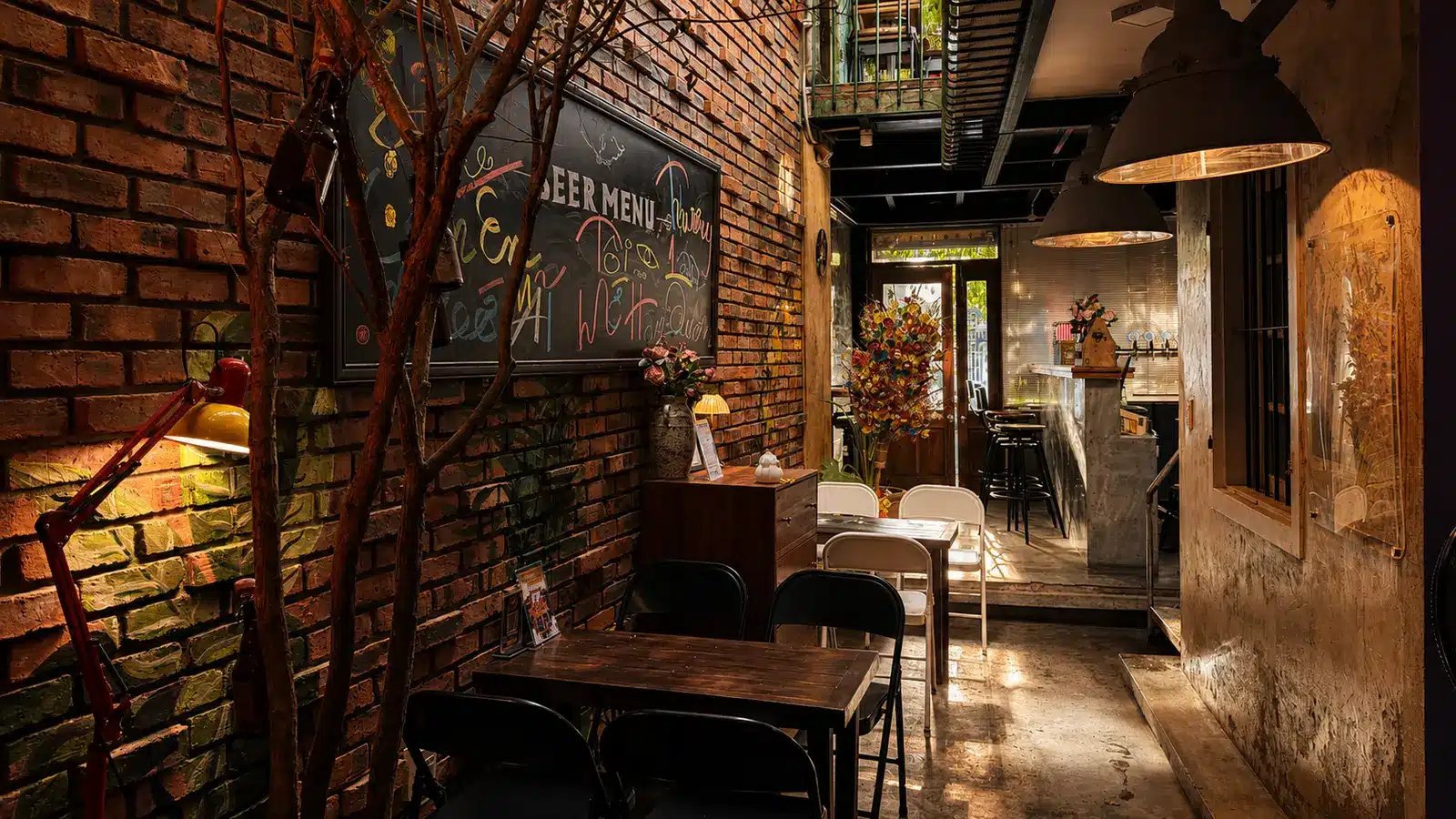
Food culture is living heritage: it preserves memory while changing. After imperial, folk and vegetarian traditions, a small brewery can offer a contemporary perspective. If interested, browse the Đông Ba Brewery beer collection before visiting the taproom at 14 Nguyễn Sinh Cung.
This stop is optional, and non-drinkers can still enjoy the meal. If you choose beer, drink responsibly, arrange safe transport and never drive afterwards. Groups can use the table reservation page; check the current menu, seasonal taps and hours first.
Frequently asked questions about Huế cuisine
Is Huế cuisine only about imperial food?
No. Imperial cuisine is important, but Huế also has a broad folk tradition and a deeply rooted vegetarian culture. To understand the city, combine everyday dishes, small cakes and perhaps a vegetarian meal instead of choosing only a reconstructed royal banquet.
How many Huế dishes should you try in one day?
There is no required number. Four eating moments — breakfast, lunch, a small late-afternoon tasting and dinner — provide plenty of variety when portions are shared. Start with less and order more only if you are still hungry.
Can people who avoid chilli enjoy Huế food?
Yes. Ask for no chilli when ordering and request chilli oil or sauce on the side. Some mixtures are seasoned in advance, however, so highly sensitive diners should ask more specifically.
Is Huế a good destination for vegetarians and vegans?
Yes. Its long vegetarian tradition supports many choices, from rice meals and noodle soups to vegetables, mushrooms and tofu. Strict vegans should confirm the broth, sauces, alliums and whether equipment is shared.
Should you choose famous restaurants or small local shops?
A mixture works well. Visitor-friendly restaurants can be easier to navigate, while small specialists reveal everyday routines but may keep limited hours. Look at what a place specialises in, when it trades, hygiene and whether the flavours suit you — not fame alone.
Sources and further reading
- Vietnam.travel – How to eat like a local in Huế.
- Visit Huế – Huế promotes tourism through cuisine (Vietnamese).
- Visit Huế – Vegetarian dining as a distinctive tradition of the former capital (Vietnamese).
Dishes, ingredients and trading hours vary by business and date. Check directly before visiting, especially if you have allergies or strict dietary requirements.