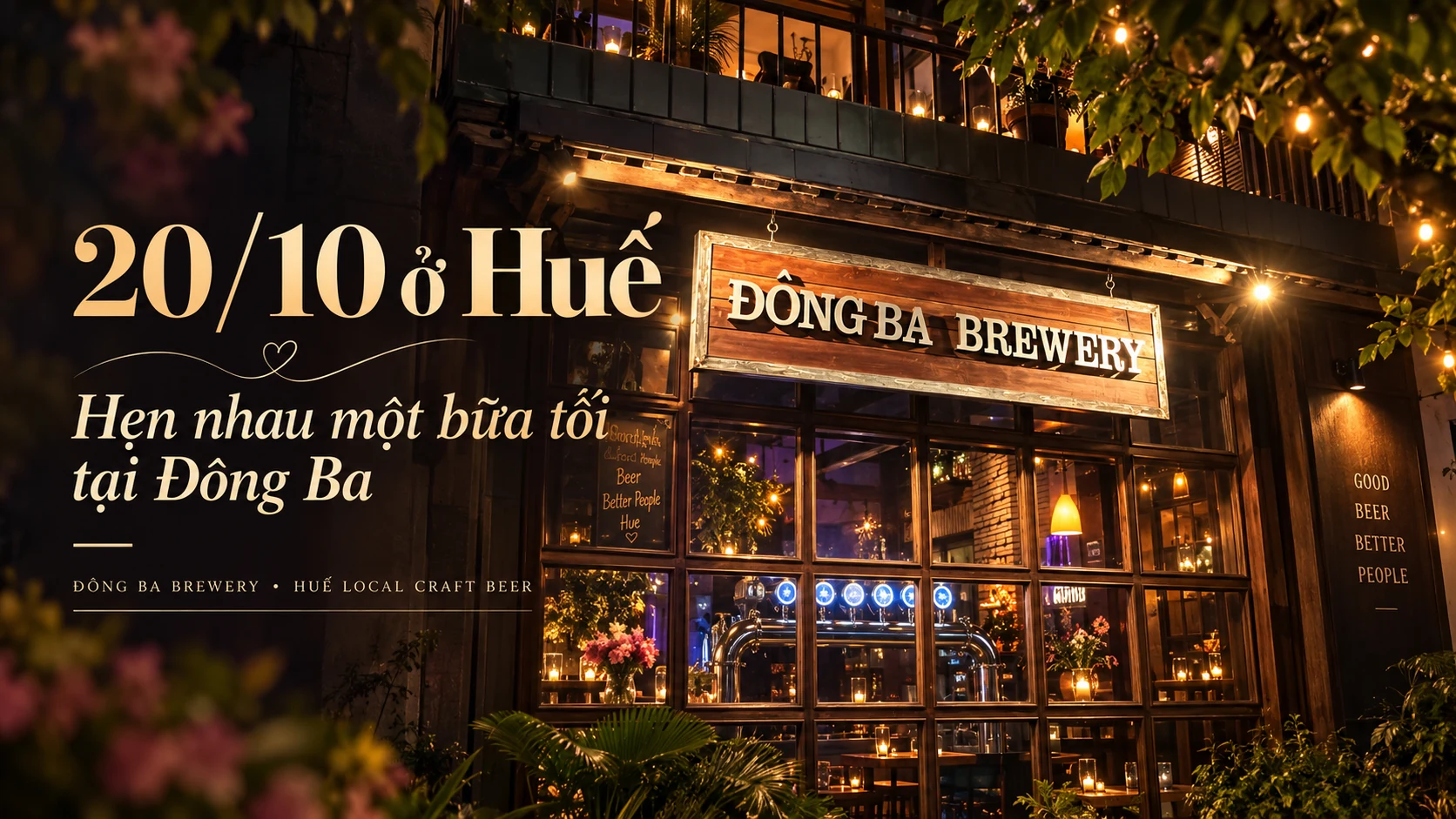

A 300-litre beer batch at Đông Ba Brewery begins with malt, hops, yeast and water, then moves through a carefully controlled journey lasting several weeks.
When a glass of beer arrives at your table at Đông Ba Brewery, everything may appear wonderfully simple: a soft head of foam, a colour that ranges from bright and clear to naturally hazy, an inviting aroma and a cold, refreshing first sip.
Behind that glass, however, is a process that takes several weeks.
Brewing day is only the beginning. The beer must then ferment, mature, condition at a low temperature and pass a series of quality checks before it is ready to be served.
At Đông Ba, every 300-litre beer batch brings together a carefully developed recipe, precise temperature control, clean equipment and the judgement of the brewer.
So, how does a 300-litre beer batch become the beer in your glass?
Contents
A 300-Litre Beer Batch: Small Scale, Close Attention
A 300-litre system suits the way Đông Ba makes craft beer in Huế. Each 300-litre beer batch is large enough to serve at the taproom, yet small enough for the brewing team to follow every stage closely.
At this scale, each recipe can be adjusted individually—from the amount and type of malt to the mash temperature, hop schedule, yeast strain and fermentation time.
A batch of Hương River Sundowners Belgian Witbier is handled differently from Dong Ba Market IPA. A seasonal fruit beer may require its own ingredient additions and fermentation plan. You can explore the current selection on Đông Ba Brewery’s beer page.
That is part of what makes craft beer so interesting: every style has its own personality, and every batch needs a slightly different kind of attention.
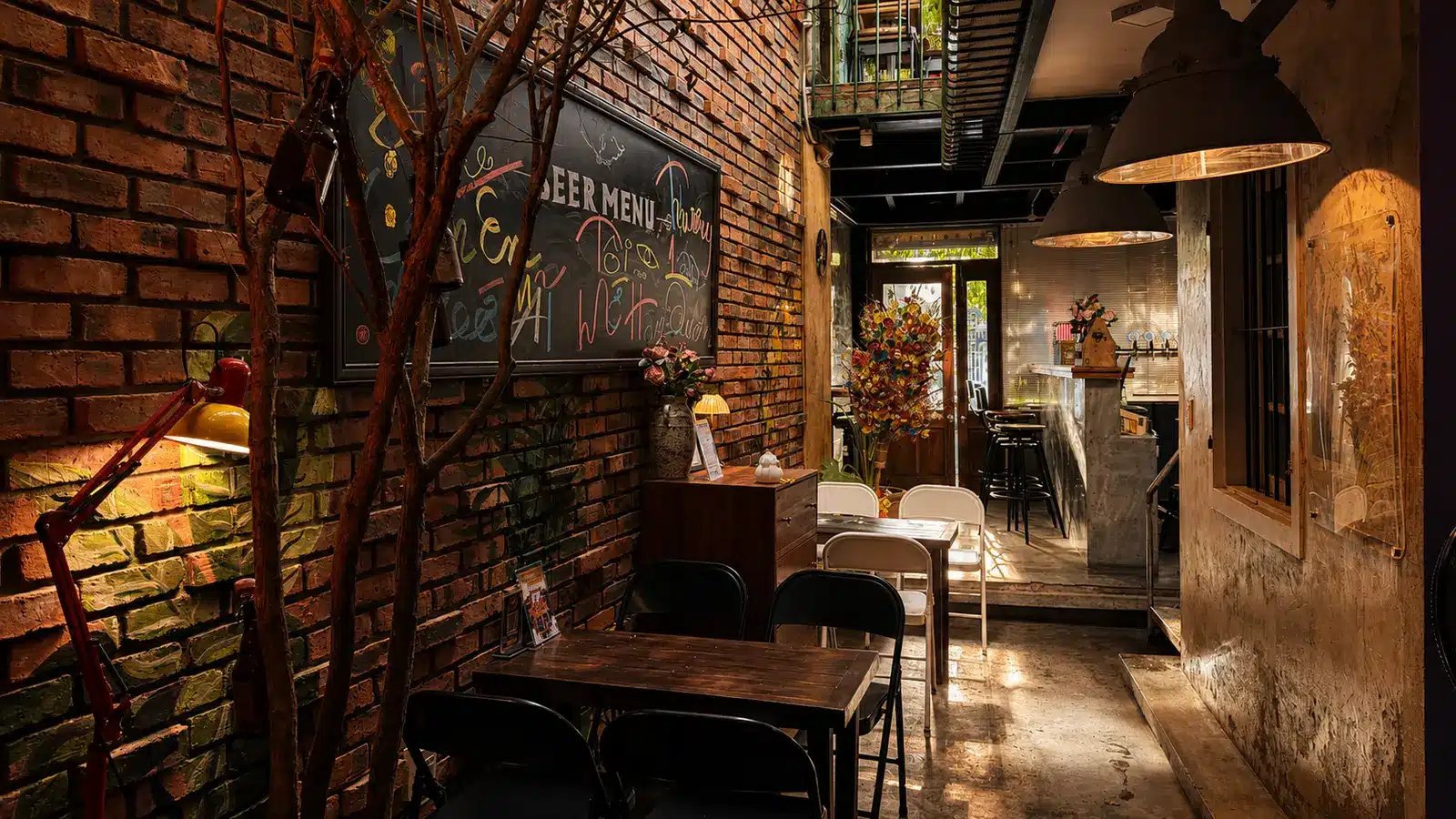
1. Preparing a 300-litre beer batch: ingredients and cleaning
Before brewing begins, every piece of equipment that will come into contact with the wort must be cleaned and inspected.
In brewing, sanitation is not a secondary job. It is part of the brewing process itself. A single area that has not been cleaned properly can affect the flavour and stability of an entire 300-litre beer batch. It is also a core topic in the Brewers Association’s brewery safety resources.
A 300-litre beer batch begins with four essential ingredients:
- Malt provides fermentable sugar, colour and the beer’s flavour foundation.
- Hops add bitterness and aroma while balancing the sweetness of the malt.
- Yeast converts sugar into alcohol, CO₂ and a wide range of flavour compounds.
- Water makes up most of the finished beer and strongly influences its mouthfeel.
Depending on the recipe, the brewer may also use wheat, oats, orange peel, coriander, fruit, tamarind, lime or other ingredients that give a beer its individual character.
2. Milling the malt
The malt is milled shortly before brewing.
The goal is not to grind it into fine flour. Instead, the grains are cracked open so the starch inside can come into contact with water during the mash. The husks should remain relatively intact because they will later form a natural filter bed.
The quality of the crush directly affects brewing efficiency. Malt that is too coarse may leave valuable sugar behind, while malt that is too fine can slow down or block the lautering process.
3. Mashing: turning starch into fermentable sugar
The crushed malt is mixed with hot water in the mash vessel.
During this stage, which commonly lasts between 60 and 75 minutes, naturally occurring enzymes in the malt break down starches into sugars that brewing yeast can consume.
Mash temperature is one of the factors that shapes the beer’s character:
- A lower mash temperature generally produces a drier and lighter beer.
- A higher mash temperature can create a fuller body and a more noticeable malt character.
Throughout the mash, the brewer monitors temperature, time and pH to keep the process aligned with the recipe.
4. Lautering and sparging
Once the mash is complete, the sweet liquid—now called wort—is separated from the spent grain.
The wort flows through the grain husks and is recirculated until it reaches the desired clarity. Hot water is then passed through the grain bed to recover more of the remaining sugars. This stage is known as sparging.
The brewer must balance efficiency with quality. Too little sparging leaves useful sugar behind, while excessive sparging can extract unwanted compounds that give the beer an astringent character.
The spent grain is no longer needed for brewing, but it can still be reused as animal feed or organic material.
5. Boiling the wort and adding hops
The wort is transferred to the kettle and brought to a boil. Depending on the recipe, this stage normally lasts around 60–90 minutes.
Boiling stabilises the wort, removes undesirable compounds and allows the hops to perform their different roles.
Hops can be added at several points:
- Hops added early in the boil mainly provide bitterness.
- Mid-boil additions contribute further layers of flavour.
- Late-boil and whirlpool additions retain more hop aroma.
For an IPA, both the quantity of hops and the timing of each addition are particularly important. In a Witbier or a sour style such as Margarita Lime Gose, bitterness is usually kept gentler so wheat, spices, fruit or acidity can take centre stage.
6. Whirlpooling and rapidly cooling the wort
After the boil, the wort is circulated to create a whirlpool.
This movement helps collect hop particles and coagulated proteins near the centre of the kettle, reducing the amount of sediment transferred into the fermentation tank.
The hot wort must then be cooled quickly to a temperature suitable for the chosen yeast.
This is a sensitive part of the process. Once the wort has cooled, it becomes more vulnerable to unwanted microorganisms. The transfer lines, cooling equipment and fermentation tank must therefore be cleaned, sanitised and checked before the transfer begins.
7. Transferring wort and pitching yeast for a 300-litre beer batch
The cooled wort is transferred into a conical fermentation tank.
Before the yeast is added, the brewer measures the wort’s original gravity, or OG. This indicates how much dissolved sugar is available for fermentation.
The correct quantity of healthy yeast is then pitched into the tank. From this point, the yeast takes over the most important part of the transformation.
As it consumes the sugar, the yeast produces:
- Alcohol;
- Carbon dioxide;
- Fruity, spicy or other characteristic aromas;
- Many of the flavours that define the finished beer.
Fermentation temperature must be controlled carefully. Even the same yeast strain can produce noticeably different results when fermented at different temperatures.
8. Monitoring fermentation
Over the following days, the brewing team monitors gravity, temperature and the progress of fermentation.
Primary fermentation for an ale may take around five to ten days, but the beer is not necessarily ready as soon as its gravity stops falling. The yeast still needs time to refine the flavour and process some of the compounds created during active fermentation.
Depending on the style, this may also be the time to:
- Dry hop an IPA or Pale Ale;
- Add fruit, tamarind or seasonal ingredients;
- Adjust pressure inside the tank;
- Remove settled yeast and hop material;
- Allow the beer to mature before cooling.
What is dry hopping? It means adding hops during or after fermentation to build hop aroma and flavour, rather than adding them to the boiling kettle in step 5. Not every 300-litre beer batch needs dry hopping; the choice depends on the style and recipe. For the terminology, see the Yakima Chief Hops handbook (PDF).
The full journey from brewing day to serving day usually takes several weeks. Some beer styles require even more time to reach the right balance.
For a more visual overview, you can also follow the seven-stage craft brewing process at Đông Ba Brewery.
9. Cold conditioning and clarification
Once fermentation is complete and the final gravity remains stable, the temperature of the tank is gradually lowered.
Cold conditioning encourages yeast, hop particles and other suspended material to settle at the bottom of the tank. The beer becomes more stable, cleaner in flavour and easier to transfer.
Not every beer needs to be perfectly clear. Witbier, Hefeweizen and other wheat-based styles may retain their natural haze as an intentional part of the beer.
The aim is not to make every beer look the same. It is to bring each batch to the condition that best suits its style.
10. Moving the beer to a brite tank or keg
After cold conditioning, the beer is transferred away from the sediment collected at the bottom of the fermenter.
Depending on the serving plan, it may be moved to a brite tank for further conditioning and carbonation before being filled into kegs.
Limiting oxygen exposure is especially important during this stage. Oxygen can quickly reduce hop aroma and make a fresh beer taste tired.
The carbonation level is adjusted to suit the style. A lively Witbier may require a different sensation from an IPA, a Pale Ale or a darker, fuller-bodied beer.
Before the batch is approved for service, the brewer checks:
- Aroma;
- Bitterness and overall balance;
- Carbonation;
- Colour and clarity;
- Foam quality;
- Final gravity;
- The overall drinking experience.
Only when the 300-litre beer batch meets the required standard is the keg connected to the taproom’s draught system.
Does a 300-litre beer batch produce exactly 300 litres of finished beer?
Not quite.
Some liquid is always retained by the spent grain, hop material, yeast sediment, transfer lines and the bottom of the tanks. Beers made with large quantities of hops or fruit may experience even greater losses.
For this reason, a “300-litre batch” usually refers to the capacity of the system or the target volume during production. It does not mean that every litre will become finished beer that can be poured into a glass.
Tracking volume and losses at each stage is therefore an important part of running a small brewery.
A recipe is only part of the difference

Two brewers can use the same malt, hops and yeast and still produce very different beers.
The difference lies in water chemistry, ingredient handling, temperature control, hop timing, yeast health, equipment cleanliness and dozens of small decisions made throughout the process.
At Đông Ba, a 300-litre beer batch is more than a production figure. It is a complete cycle—from the moment the first grains are milled to the moment the finished beer is poured at the bar.
Perhaps the most enjoyable part is that the place where you drink the beer is only a few steps away from where it was brewed. That is the idea behind fresh craft beer brewed on site in Huế.
From a 300-litre beer batch to your glass
When you visit Đông Ba Brewery at 14 Nguyễn Sinh Cung in Huế, you are not simply visiting a place that serves craft beer.
You can see the brewing system, the fermentation tanks and the space where each 300-litre beer batch takes shape. Every tap represents several weeks of waiting, monitoring and careful adjustment.
From malt, hops, yeast and water, a 300-litre beer batch gradually becomes something with its own recipe, the brewer’s personal touch and a little of the spirit of Huế in every glass.
Explore Đông Ba Brewery’s current beers or book a table before your visit.